
-
Pest SolutionsPESTS + WEEDSUSING PESTICIDES OR HERBICIDES?

I should be a large image.
Aphids on Trees and Shrubs
Many species
Updated Apr 20, 2026
Make a Positive Identification
- If you find shrub leaves or other surfaces covered with shiny stickiness or black crustiness, look up.
- Certain tree species, like linden, attract aphids and other sucking insects. They excrete honeydew. This is the excess sugary sap they have sucked from the tree. This rains down on plants, paving, or objects below.
- Sooty mold is a fungus that grows on the honeydew. It is often found on Rhododendrons and other plants growing beneath infested trees.
- You may also see ants, yellow jacket wasps, flies, or bees. They feed on the honeydew, or on the sucking insects.
See the Prevent Aphid Problems on Trees and Shrubs section for more details.
Species:
Signe Danler, Oregon State University
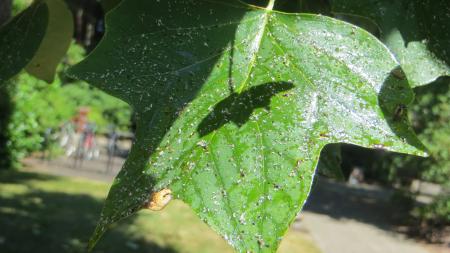
Aphids and certain other sucking insects produce a sticky, shiny substance called honeydew. Honeydew is the undigested sugar water from plant sap. It drips down and can coat leaves and other plant parts.
Aphids also drop cast skins, which stick to the honeydew and add to the mess.
Species:
"Citrus: Scale insects and sooty mold" by Plant pests and diseases is marked with CC0 1.0
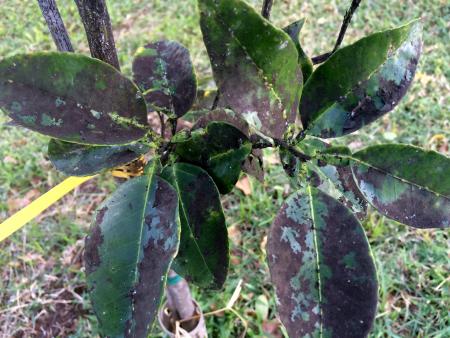
Sooty mold fungus grows on the honeydew. It can coat leaves and bark. In this photo, scale insects have caused sooty mold on a citrus tree.
Species:
Whitney Cranshaw, Colorado State University, Bugwood.org
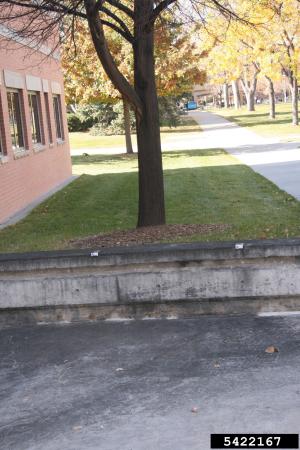
Honeydew may also coat other objects underneath the tree, like cars, pavement, and furniture. Sooty mold fungus can grow on them as well.
Species:
Signe Danler, Oregon State University
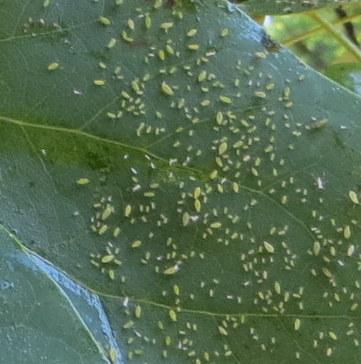
Common honeydew-producing insects include aphids, scale, and some thrips. It can also be produced by other insects that suck plant sap.
Aphids on Trees and Shrubs Benefits
- The sweet honeydew can be a source of food for insects such as ants, butterflies, wasps and flies. Honeybees may feed on it when other nectar is scarce.
- Many helpful insects and birds eat aphids and other insects that produce honeydew.
Aphids on Trees and Shrubs Risks
- High populations of aphids and other sucking insects can cause plant injury. Their feeding can cause wilting and even die-back of shoots and buds. New leaves may curl.
- The sooty mold fungus that grows on honeydew blocks light to leaves. It reduces the plant’s ability to produce food. This can weaken plants growing under heavily infested trees.
Risk Card
Does it cause harm?
Adults & Children
None
Property
Some
Pets
None
Annoyance
High
Environment
None
Action Optional
Take Action?
Many trees and shrubs are affected by aphids and other sucking insects.
Do I need to take action?
- You can leave aphids and other sucking insects in trees alone. Some, such as scale, can cause severe damage.
- Sticky honeydew and sooty mold, or tree damage, may occur. If they are more than you can tolerate, you will need to take action.
What if I do nothing?
- You may have a sticky mess on plants or surfaces below an infestation.
- Sooty mold fungus may grow on surfaces and plants. It can interfere with the function of plant leaves.
- Insect feeding may directly damage the plant.
Prevent Aphid Problems on Trees and Shrubs
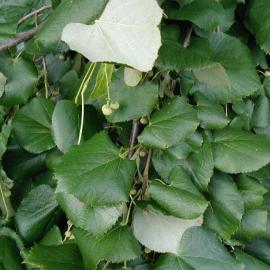
"Tilia-tomentosa" is licensed under CC BY-SA 3.0
Plant trees that are less susceptible to aphids and other sucking insects
Certain types of trees are very susceptible to sucking insects like aphids. They include:
- Linden, Basswood (Tilia species)
- Citrus, Cherry and other fruit trees
- Elm (Ulmus species)
- Mimosa (Albizia julibrissin)
- Maple (Acer species)
- Northern catalpa (Catalpa speciosa)
- Pine (Pinus species)
Instead of trees that attract sucking insects like aphids, plant species that resist them.
- Instead of common linden (Tilia americana), plant silver linden (Tilia tomentosa) or perhaps T. platyphyllos and T. × euchlora.
- Plant a different type of tree altogether.
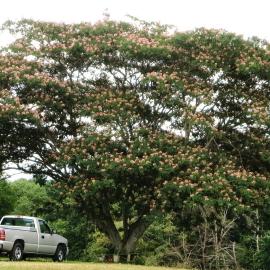
"flora huge mimosa tree" by BJeanW is marked with CC0 1.0
Plant linden and other susceptible trees where honeydew doesn't cause a problem
- The mimosa tree in the photo is in a good location, away from human activities. If vehicles park under it, though, the sticky honeydew could drip on them.
- If you must plant these trees, don’t plant them near sidewalks, patios, or parking lots.
- Avoid places that humans or their vehicles and furniture gather.
- Plant them in open landscape areas where sticky honeydew won’t be a problem.
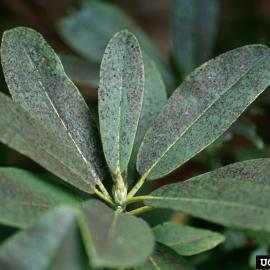
Joseph OBrien, USDA Forest Service, Bugwood.org
Don't over-fertilize trees
- Too much Nitrogen fertilizer makes leaves grow soft and succulent.
- This is very attractive to sucking insects.
- Most trees need little or no supplemental fertilizer.
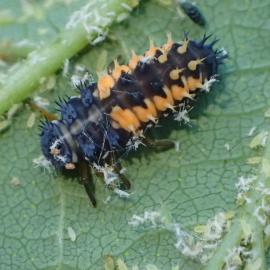
Whitney Cranshaw, Colorado State University, Bugwood.org
Encourage Beneficial Predatory Insects
- Many insects prey on aphids and other soft-bodied insects.
- Plant flowers to attract predatory insects. See Biological Pest Control Methods.
- Don't use insecticides that will kill them.
Solutions for Aphids on Trees and Shrubs
Control aphids and other sucking insects early in the growing season. This will lower their numbers throughout the season.
Monitoring
- When the tree leafs out, put a dark plate or other object under the branches. If you see spatters of honeydew, you will know that sucking insects are present.
- Check the top surface of the lower leaves for honeydew or sooty mold fungus.
- Check leaf undersides. Aphids and other sucking insects may hide there and be overlooked.
- Check the leaves of plants growing under affected trees for honeydew or sooty mold fungus.
Non-chemical Methods
- Encourage aphid predators such as ladybugs and green lacewings. For more information, see Biological Pest Control Methods: Attract Insect Pest Predators and Natural Enemies
- Wash aphids and other soft-bodied insects off of plants with a strong stream of water. (This may also wash off predators.) Wash honeydew from plants with a strong stream of water.
- Discourage ants that protect aphids.
Insecticides (Insect Killers)
- Insecticides effectively control aphids on trees when applied early in the season. Read the label instructions.
- Insecticides can be harmful to pollinating insects. They should not be applied during bloom time.
- They can also kill natural enemy insects that feed on the pest insects. The pest insects will re-populate faster than the natural enemies.
NEED HELP?
Consider a licensed pest control company. Learn How to Hire a Pest Control Company.
Your local Extension Specialist in Oregon and other states can suggest other methods.
Jump to
| Method | Does it work? | Is it safe? | Recommendation |
|---|---|---|---|
A Spray with Water |
Effective |
Low risk |
Recommended |
B Attract Predators of Sucking Insects |
Somewhat effective |
Low risk |
Recommended |
C Discourage Ants |
Effective |
Low risk |
Recommended |
D Control using Insecticides |
Effective |
Moderate risk |
Use if Necessary |
|
E If Using Insecticides, Protect Yourself & Minimize Risks
|
A
Spray with Water
Non-Chemical Method
"Aphids, Garden, Drops" by Jerzey Gorecki is licensed under Creative Commons Zero (CC0)
Spray with Water
Recommended
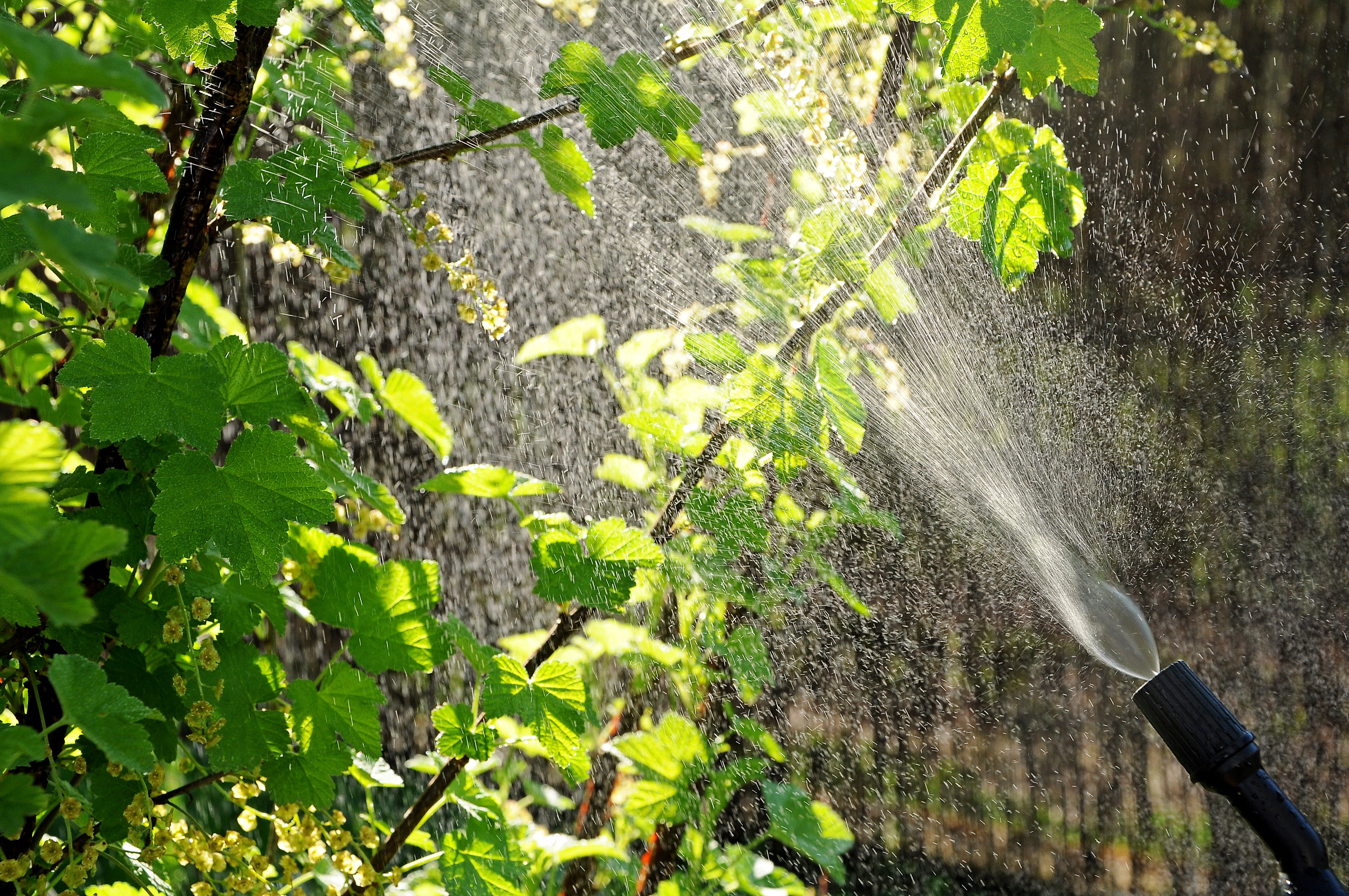
Spray a strong stream of water at leaves, stems, and flowers of infected plants to remove feeding insects.
| Does it work? | Effective |
| How much effort? | Moderate effort |
| What's the risk? | Low risk |
| Possible risk of exposure or harm from chemicals | NONE |
B
Attract Predators of Sucking Insects
Non-Chemical Method
David Cappaert, Bugwood.org
Attract Predators of Sucking Insects
Recommended
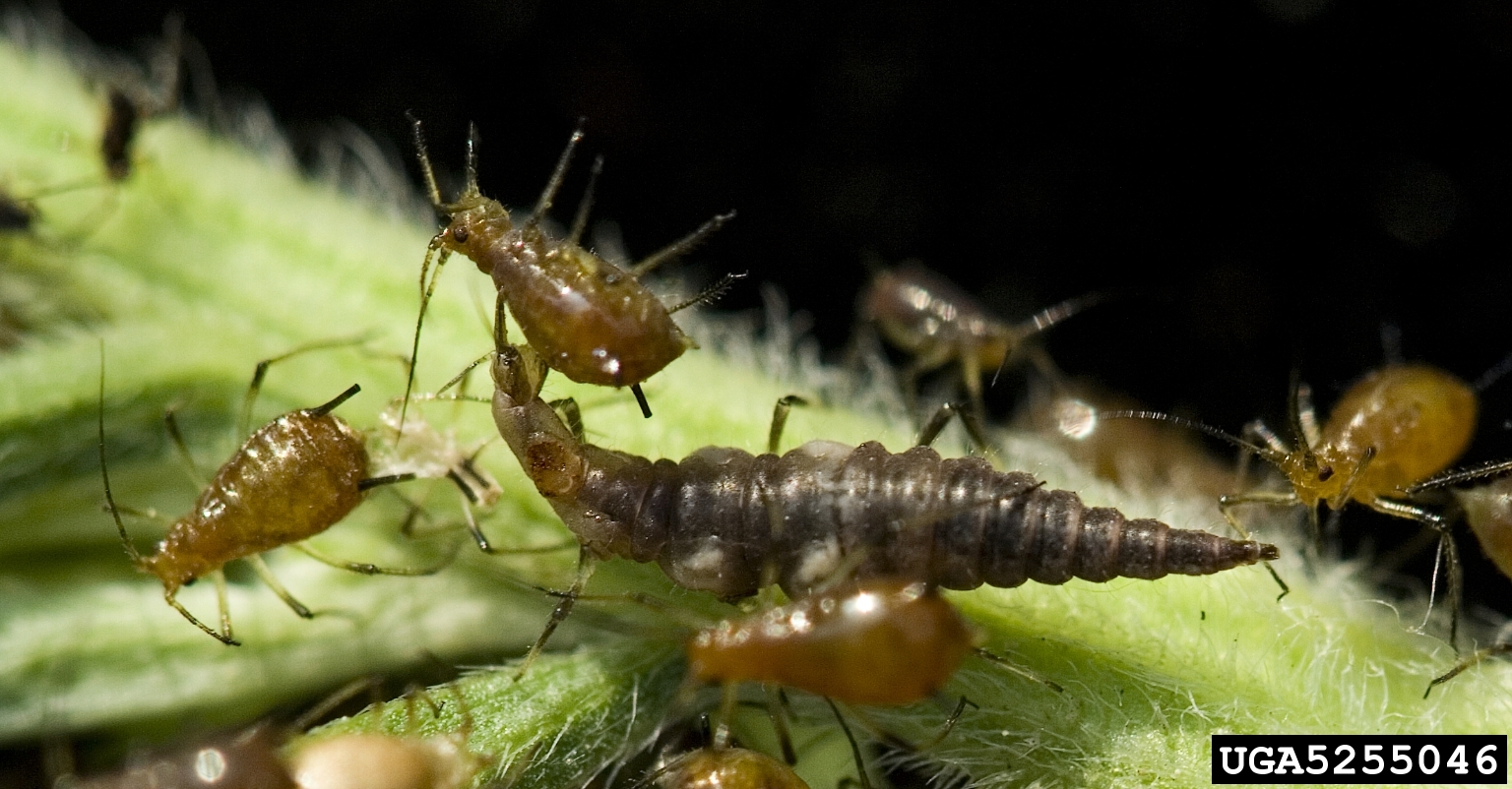
Birds, spiders, and insect predators are natural enemies that feed on aphids and other insects.
- Attract natural enemies to your garden. For more information, see Biological Pest Control Methods: Attract Insect Pest Predators and Natural Enemies
- You can also purchase and release insect natural enemies. These include lady beetles, lacewing larvae, syrphid fly larvae, and parasitoid wasps.
- Follow the provided instructions on how and when to release them.
- Proper timing is important. Release insect predators when prey insects are present.
- Release them as close as possible to the infested area.
- Make sure you are releasing enough predators for the job.
- Released predators may leave the garden before controlling aphids.
Don’t apply insecticides that would also kill the beneficial predators.
| Does it work? | Somewhat effective
|
| How much effort? | Low effort |
| What's the risk? | Low risk |
| Possible risk of exposure or harm from chemicals | NONE |
C
Discourage Ants
Non-Chemical Method
David Cappaert, Bugwood.org
Discourage Ants
Recommended
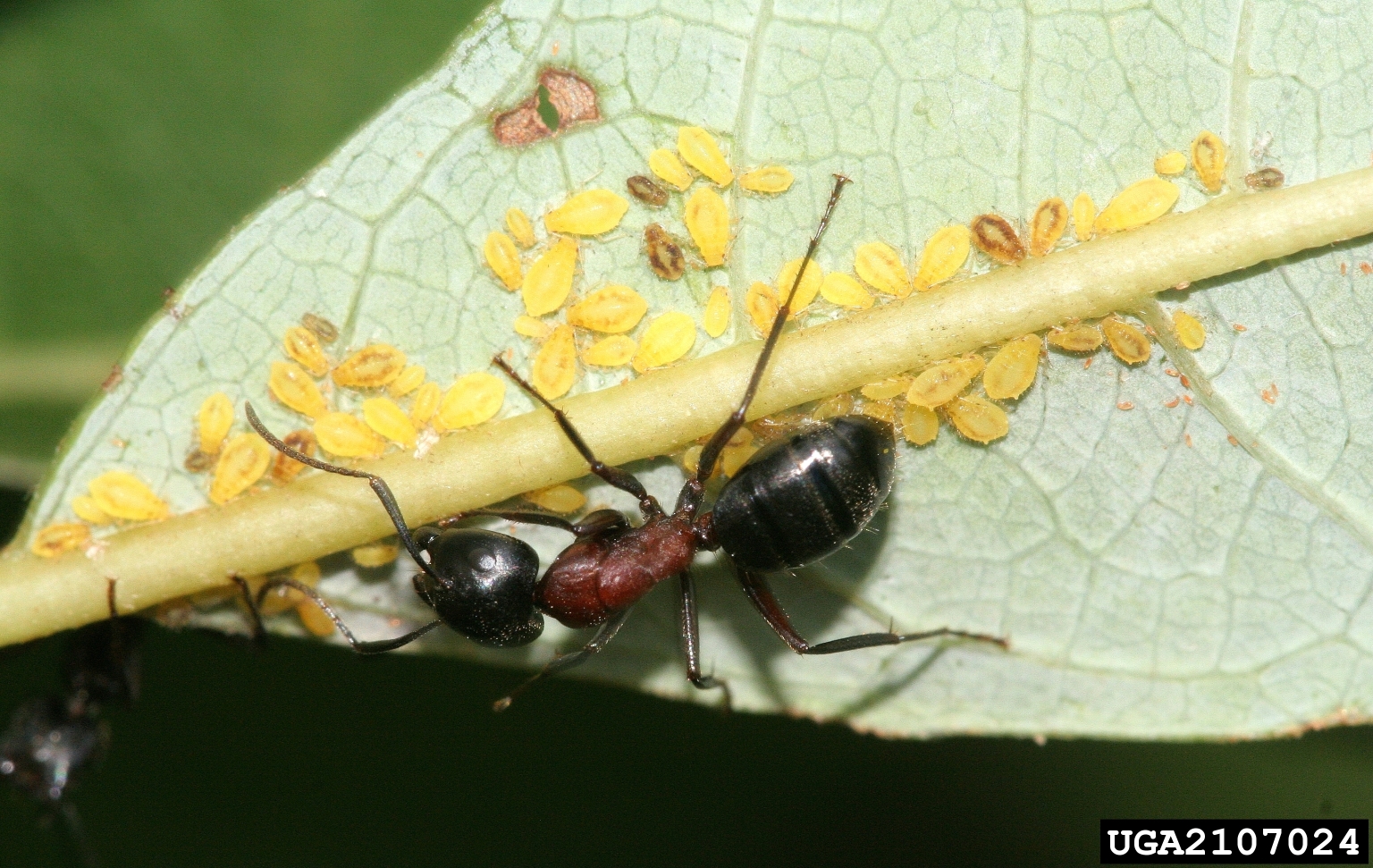
- If you see many ants traveling on plant stems, it may indicate the presence of pest insects.
- Ants feed on honeydew from sucking insects. They will defend the honeydew insects from other insects that eat them.
- Managing the ants allows natural enemies to eat the aphids and other sucking insects.
- Blast the ant trails with water. This can disorient them.
- Put a band of sticky material like Tanglefoot around the trunk. This will prevent ants from climbing up. Don’t use on young or thin-barked trees.
- Bait stations can be used to weaken the colony.
- Prune out other ant routes such as branches that touch buildings, the ground, or other trees.
| Does it work? | Effective |
| How much effort? | Moderate effort |
| What's the risk? | Low risk |
| Possible risk of exposure or harm from chemicals | NONE |
D
Control using Insecticides
Chemical Method: Use with caution
iStock
Control using Insecticides
Use if Necessary
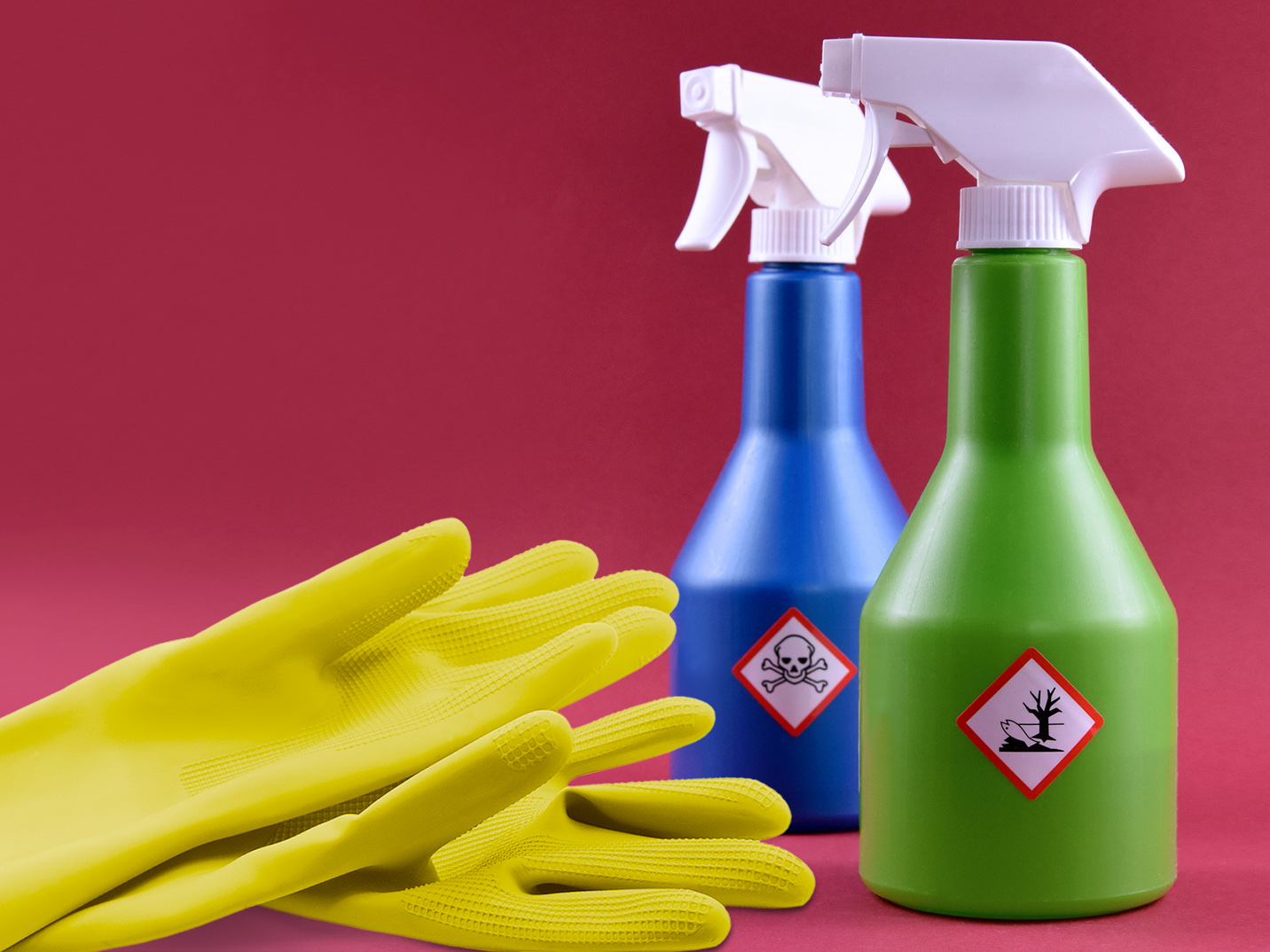
- Insecticides provide effective control if applied early in the season. Coverage must be good.
- It is hard to control aphids and other honeydew-producing insects on trees. Large trees are hard to spray thoroughly with insecticides. This should only be done by a professional pesticide applicator.
- Systemic insecticides applied to the soil are effective. However, they can kill pollinators attracted to the flowers.
- The insects excrete the insecticide in their honeydew. This can kill beneficial insects that eat it.
| Does it work? | Effective |
| How much effort? | Moderate effort |
| What's the risk? | Moderate risk |
| Possible risk of exposure or harm from chemicals | Using insecticides includes some amount of risk. The lowest risk comes with using alternative methods.
You may be exposed to an insecticide if you:
Follow label directions to reduce risk. |
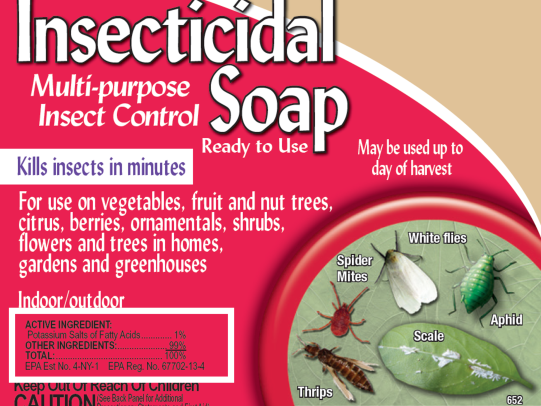
Some insecticides are available for home use. A few are listed below. These active ingredients are suggested chemical treatments to control aphids on trees. Look for these chemical names in the “Active Ingredients” section of product labels.
- Mineral oil (Note the time of application for effective control.)
- Neem extract (Azadirachtin) Some formulations are OMRI-listed for organic use.
- Potassium Salts of Fatty Acids (Potassium laurate)
- Emamectin benzoate
- Pyrethrins
- Imadicloprid
Suggested active ingredients are from the Pesticide Information Center Online (PICOL) Database. They are permitted for HOME use in Oregon. Read the label for application directions and effectiveness information.
ONLY professional pesticide applicators can use Restricted-Use Pesticides (RUP) that may be more effective. If you need further support, contact a licensed pesticide applicator.
SYSTEMIC INSECTICIDES (NEONICOTINOIDS)
- Neonicotinoids are human-made chemicals similar to nicotine. They are toxic to insects.
- Imidacloprid is an example active ingredient in this group of insecticides.
Neonicotinoid insecticides can harm pollinators and natural enemies. Following application, the poison may be found in flowers for months or years. Beneficial insects feed on the nectar and pollen. For more information, see OSU’s How to Reduce Bee Poisoning from Pesticides
Linden and basswood (Tilia) trees are highly prone to aphid infestations. Insecticides are often recommended to control the aphids. Aphid infestations occur at the same time as blooming. For this reason, insecticide applications can cause mass kills of bees.
The Oregon Department of agriculture has banned the use of neonicotinoid products (dinotefuran, imidacloprid, thiamethoxam and clothianidin) on trees in the Tilia genus due to the potential risk to pollinators. See ODA’s PESTICIDE ADVISORY.
If Using Insecticides, Protect Yourself & Minimize Risks
Chemical Method: Use with Caution
Weston Miller, Oregon State University
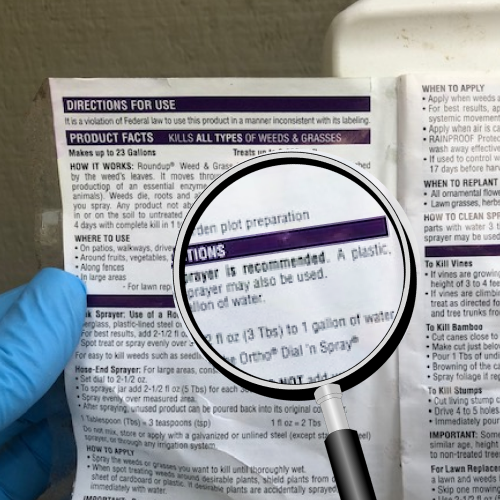
Why Is It Important to Read Insecticide Product Labels?
- They have detailed information on how to use the product correctly and legally.
- They contain information on potential hazards of the product.
- They provide instructions you should follow for poisonings and spills.
- Following label instructions helps you to minimize the risks and maximize the benefits.
Key Insecticide Safety Tips
- Read the entire label front to back.
- Follow the instructions.
- Review the instructions even for brands you know.
- Only apply the product where the label says it can be applied.
- Keep all insecticides in their original container.
The Label is the Law
ALWAYS read the label before using insecticide products. The label is a legal document that provides information on how to safely use the insecticide. It includes required personal protective gear and application methods. This helps avoid harm to human health and the environment. Using an insecticide in ways not listed on the label is illegal. It can result in legal enforcement actions.
READ THE LABEL & Follow Instructions
It has instructions to protect you and the environment.
- Labels are different for every product and they often change over time.
- Use a magnifying glass for small print.
- Pay attention to CAUTION, WARNING, and DANGER statements.
- Pay attention to the PRECAUTIONARY STATEMENTS.
- The law states you must read and follow insecticide instructions.
Protect Yourself
Eye, skin, & lung irritants
- Wear the right protective gear. This often includes, but is not limited to: a long-sleeved shirt, pants, socks, closed shoes, safety glasses, and chemical-resistant gloves.
- Avoid contact with eyes, skin, or clothing.
- Wash hands after mixing or applying, and before eating or smoking.
- Never spray directly overhead. Pay attention to wind conditions.
Protect Children & Pets
Keep out of the reach of children.
- Keep children and pets away from the application area (read label for how long).
- Remove toys and pet dishes from the area before applying insecticides. Wait until spray has dried or dust has settled.
Protect Pollinators
Many insecticides are extremely toxic to bees.
- Honey bees and other pollinators are harmed by most insecticides.
- Don’t spray on bees or other flying insects.
- Don’t allow spray to contact blooming plants.
Avoid Wet Weather & Keep Insecticides Out of Waterways
Some insecticides are toxic to fish and aquatic invertebrates.
- Don’t spray insecticides in water.
- Insecticides sprayed on plants can wash off with rain and enter waterways.
Storage & Disposal
- Store out of the reach of children and pets.
- Store in a cool and dry place.
- Never pour down any drain.
- If you mix too much, apply it according to the label rather than storing it.
- Don’t put pesticide containers in the trash unless instructed by the label.
- Take unused insecticides to a hazardous waste facility.
Call 1-800-CLEANUP (1-800-253-2687) to find out where to dispose of pesticides.
For the Portland metro region in Oregon, contact Metro’s Recycling Information. Call 503-234-3000, email or visit Metro’s website
More about:
About Using Pesticides on School Grounds in Oregon
If using pesticides on school grounds, there are special rules in Oregon. See School Integrated Pest Management (Oregon Department of Agriculture).
NEED HELP?
The National Pesticide Information Center (NPIC) can answer questions about pest control chemicals.
1-800-858-7378 or npic@ace.orst.edu
Consider using a licensed pest or weed control company. Learn How to Hire a Pest Control Company.
Your local Extension Specialist in Oregon and other states can suggest other methods.
Content developed by Signe Danler and reviewed by Thomas A. Jima. Pesticide safety information edited by Kaci Buhl.
Peer review facilitated by OSU Department of Horticulture.



Aphids on Shade Trees and Ornamentals
Colorado State University Extension
How to reduce bee poisoning from pesticides
PNW Insect Management Handbook
Bumble bees, Trees, and Neonicotinoids
Oregon Department of Agriculture
Landscape pests-Aphid
PNW Insect Management Handbook
Aphids
UC IPM
Aphids (pdf)
Washington State University Extension
Sooty Molds (pdf)
Cornell University
Sooty Mold
UMass Extension Landscape, Nursery and Urban Forestry Program