
-
Pest SolutionsPESTS + WEEDSUSING PESTICIDES OR HERBICIDES?

I should be a large image.
Spotted Lanternfly
Lycorma delicatula
Updated Apr 21, 2026
Make a Positive Identification
- Spotted lanternfly (SLF) is an invasive species of planthopper. It is currently found in 19 states, and spreading.
- Nymphs and adults cause feeding damage to many different plants in landscapes, farms, and natural areas.
- Tree-of-heaven (Ailanthus altissima) - also an invasive species - is its preferred plant host.
- SLF will build populations on tree-of-heaven. Then it can spread to important crops like grapes, hops, and fruit trees like apple, cherry, and peach.
- Adult spotted lanternflies are active on host plants from July to December.
- The nymphs are found between May and July.
- If you think you’ve seen a SLF adult or nymph in Oregon, please report them to the Oregon Invasive Species Hotline at: 1-866-INVADER (1-888-468-2337) or use their online reporting form.
Species: Spotted lanternfly
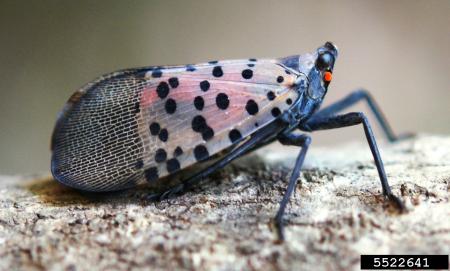
Lawrence Barringer, Pennsylvania Department of Agriculture, Bugwood.org
Adult spotted lanternflies are about 1 inch (2.54 cm) long. At rest they fold their wings over their back like a tent. The wings are grayish with black spots. The antennae appear nearly non-existent because they are very short and bulbous.
Species: Spotted lanternfly
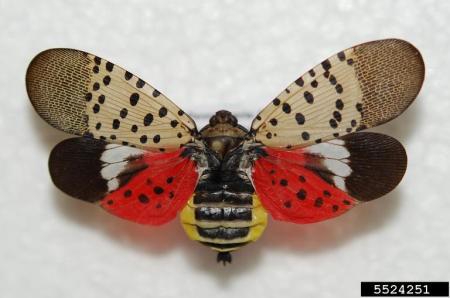
Lawrence Barringer, Pennsylvania Department of Agriculture, Bugwood.org
The adult wingspan is about 2 inches. The colorful wings are grayish with black spots in front. The hind wings are black, white and deep red. The abdomen is black with yellow stripes.
Species: Spotted lanternfly
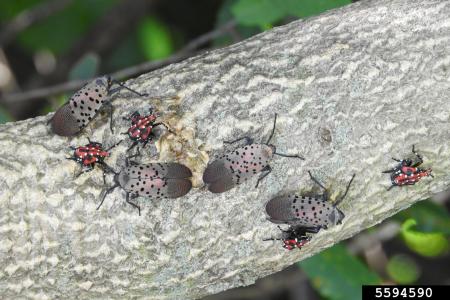
Richard Gardner, Bugwood.org
Spotted lanternflies can cluster on trees in dense groups. Both adults and nymphs may be present.
Species: Spotted lanternfly

"20180716-ARS-SRA-d4016-05" by USDAgov is marked with Public Domain Mark 1.0
Spotted lanternfly nymphs change through four stages (instars) before adulthood. The three youngest instars are black with white spots. The fourth instar is black-and-red with white spots. Size ranges from 1/5 to 3/4 inch long as they grow. Fourth instars molt into adults, the only life stage with wings.
Species: Spotted lanternfly
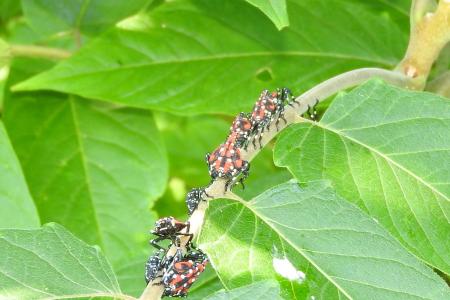
Richard Gardner, Bugwood.org
Tree-of-heaven (Ailanthus altissima) is a preferred food source. They feed on many other plants too. The photo shows spotted lanternfly nymphs on tree-of-heaven.
Species: Spotted lanternfly
Emelie Swackhamer, Penn State University, Bugwood.org
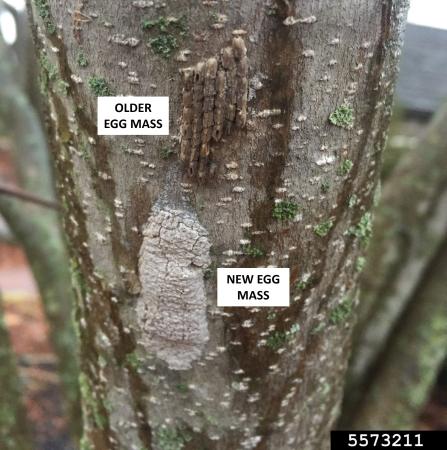
Females usually lay egg masses on tree trunks. They may use any other hard or smooth outdoor surface. They cover the egg mass with a grayish, putty-like material. The egg mass is about 1 inch wide by 2 inches long. It is well camouflaged, resembling a smear of mud. Older egg masses reveal 4-7 columns of brownish, seed-like eggs.
Species: Spotted lanternfly
Lawrence Barringer, Pennsylvania Department of Agriculture, Bugwood.org
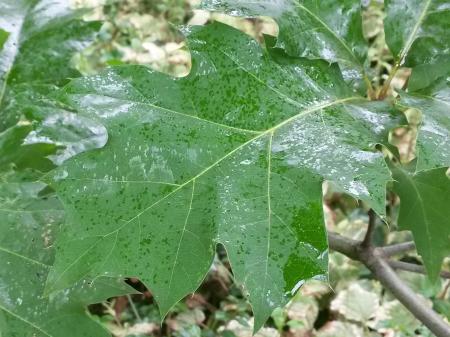
Both nymphs and adults feed on plant sap. They excrete the sugary water left after they extract nutrients. This sticky “honeydew” coats surfaces beneath the infested plant. It can cover leaves and fruit, sidewalks, vehicles, chairs and other objects. Honeydew is produced by many sucking insects, including aphids and scale.
Species: Spotted lanternfly
Stephen Ausmus, USDA-ARS
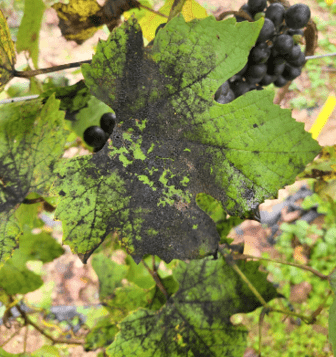
The honeydew promotes the growth of unattractive black sooty mold. It stresses the plants by interfering with photosynthesis. It also attracts wasps, bees, and ants. These can cause other problems.
LOOKALIKES
Species: Cinnabar moth
"Cinnabar Moth" by Slideshow Bruce is licensed under CC BY-NC 2.0
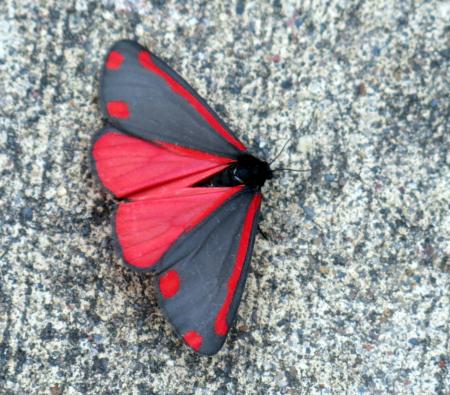
Cinnabar moth (Tyria jacobaeae) is an introduced insect. Its larvae help to control tansy ragwort (Senecio jacobaea), a noxious weed. Cinnabar moth has red underwings like adult SLF, but no white or black spots.
Species: Ornate tiger moth
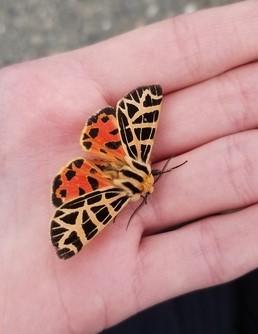
"Apantesis ornata" by Naomi is licensed under CC BY-NC 4.0
Ornate Tiger Moth (Apantesis ornata) has red underwings with black markings. The forewings are tan with bolder black markings. The colors are similar to adult ALF, but the markings are large and irregular, not small dots.
Species: Boxelder bug
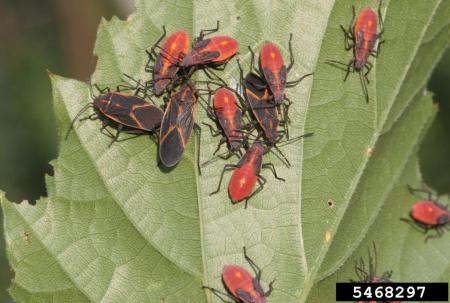
Steven Katovich, Bugwood.org
Boxelder bug (Boisea trivettata) adults and nymphs appear somewhat similar to the 4th instar SLF. They are black and red, but have no white spots.
Species: Small milkweed bug
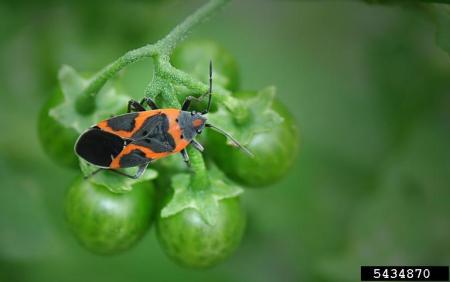
Jon Yuschock, Bugwood.org
Small milkweed bug (Lygaeus kalmii) adults appear somewhat similar to 4th instar SLF. They have a red cross on the black back, but no white spots.
Species: Assassin bug
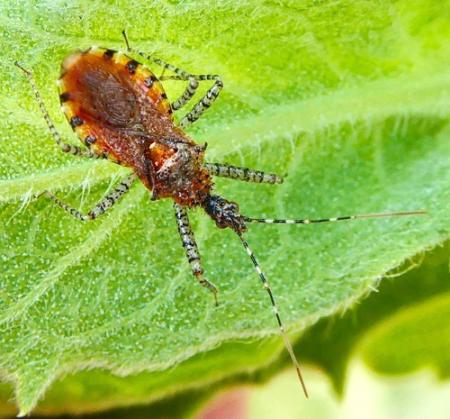
Photo “9864526” by dlbowls is licensed under CC BY-NC
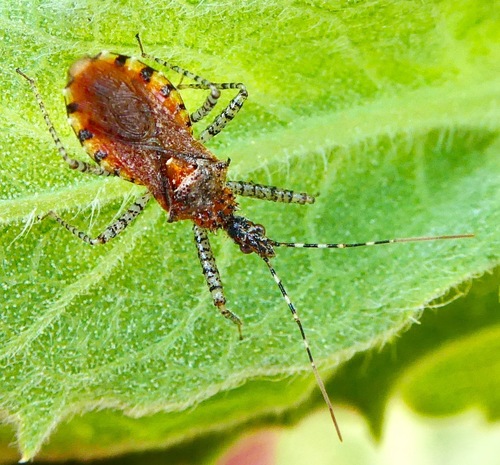
The nymphs of some assassin bugs are black with a red abdomen. They appear somewhat similar to the 4th instar SLF. Assassin bugs give a painful bite – do not handle them!
Spotted Lanternfly Benefits
- Spotted lanternflies are regarded as pests.
- Their honeydew can be a food source for wasps, bees, and ants.
- Outside of their native range, they have few if any other benefits.
Spotted Lanternfly Risks
- They suck sap from young stems and leaves, which can weaken the plant.
- They secrete large amounts of honeydew that promotes the growth of black sooty mold.
- The mold interferes with photosynthesis. It can reduce plant health and fruit quality. It also makes a mess on anything below the infested plant.
- The honeydew attracts wasps and bees that may sting, and ants that may not be desirable.
Risk Card
Does it cause harm?
Adults & Children
None
Property
High
Pets
None
Annoyance
High
Environment
High
Action Highly Recommended
How to Report Spotted Lanternfly
Spotted Lanternfly in Oregon
The spotted lanternfly is not known to occur in the Pacific Northwest, but parts of the regions would provide good habitat for this invasive insect. It would pose a major threat in the Pacific Northwest if it becomes established.
The best way to keep them from getting established in Oregon is to spot and destroy them early. Watch for SLF nymphs or adults on your property and in public landscapes.
If you think you’ve found spotted lanternflies in Oregon, please report them to the Oregon Invasive Species Hotline at: 1-866-INVADER (1-888-468-2337) or use their online reporting form.
For complete reporting details, see “How to collect and report spotted lanternfly.”
See also Pest Alert: Spotted Lanternfly is an Invasive Insect That May Impact Oregon (OSU Extension Service)
What damage does spotted lanternfly cause?
Nymphs and adults damage many different plants in landscapes, farms, and natural areas.
Do I need to take action?
- Yes. If you see an SLF adult or nymph on your property or in a public space, collect and report it to the Oregon Invasive Species Hotline at: 1-866-INVADER (1-888-468-2337) or use their online reporting form..
- Don’t transport materials that could harbor egg masses from infested parts of the country.
Prevent Spotted Lanternfly Infestations
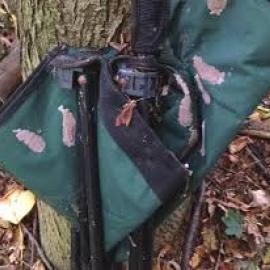
Liz Willow, Pennsylvania State University
Don't Transport Outdoor Items from Infested Areas
- Egg masses may be present on any outdoor item. These may include cars and trailers, wooden posts, flowerpots and planters, bricks and landscape rocks, plastic yard objects, and many other surfaces. The image shows several egg masses on a folding outdoor chair.
- Egg masses are hard to see, and resemble a smear of mud.
- Carefully inspect outdoor items carried or shipped from infested areas.
- Review this checklist for items that could be carrying SLF egg masses.
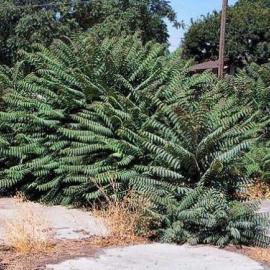
Joseph M. DiTomaso, University of California - Davis, Bugwood.org
Remove Tree-of-heaven (Ailanthus altissima) if Present
- Spotted lanternfly has not yet been confirmed in Oregon.
- However, tree-of-heaven is present in the PNW. It is a preferred food source of SLF, as well as being an invasive tree.
- Removing it where possible is a good idea even if SLF is not present, even though this control option is not yet officially recommended.
- See How to Get Rid of Tree-of-Heaven
Solutions for Spotted Lanternfly
Early Detection & Rapid Response
- Keen eyes and quick reporting could be vital for keeping this pest from getting established in Oregon.
- If you suspect you have found spotted lanternfly adults or nymphs, report it to the Invasive Species Hotline, 1-866-INVADER (1-888-468-2337) or use their online reporting form.
Hand Picking
- Hand picking can be effective with very small infestations. Report ANY sightings.
Chemical Methods
- Insecticides are effective for controlling spotted lanternfly.
- None are registered in the state of Oregon, since it is not yet present.
- If it gets established in Oregon, then pesticides will become available to treat it.
NEED HELP?
Consider a licensed pest control company. Learn How to Hire a Pest Control Company.
Your local Extension Specialist in Oregon and other states can suggest other methods.
Content developed by Signe Danler and reviewed by Thomas A. Jima. Pesticide safety information edited by Kaci Buhl.
Peer review facilitated by OSU Department of Horticulture.



Spotted Lanternfly References
Spotted Lanternfly
PNW Pest Management Handbooks
Pest alert: Spotted lanternfly is an invasive insect that may impact Oregon
OSU Extension Service
Spotted lanternfly resources (most current)
OSU Extension Service
Spotted Lanternfly
Penn State University
Spotted Lanternfly – A Guide for Homeowners and Residents in Michigan
Michigan State University Extension