
-
Pest SolutionsPESTS + WEEDSUSING PESTICIDES OR HERBICIDES?

I should be a large image.
Pear Rust
Gymnosporangium spp.
Updated Sep 03, 2026
Make a Positive Identification
- Rust fungus causes rusty, orange spots on European and Asian pear leaves, fruits, and stems.
- It forms orange bumps (pustules) on the lower surface.
- Two types of rust fungus affect pears in the PNW:
- Pacific Coast Pear Rust (Gymnotelium blasdaleanum, formerly Gymnosporangium libocedri) needs incense-cedar (Calocedrus decurrens) as an alternate host. It affects many plants in the rose family, including pear, apple, crabapple, hawthorn, mountain ash, quince and serviceberry.
- Trellis or European Pear Rust (Gymnosporangium sabinae) alternates between pear and juniper. It is less of a problem in the PNW than Pacific Coast Pear Rust.
Pacific Coast Pear Rust, Cedar Rust
Species: Pacific Coast Pear Rust
Jay Pscheidt, Oregon State University
Symptoms on Pear
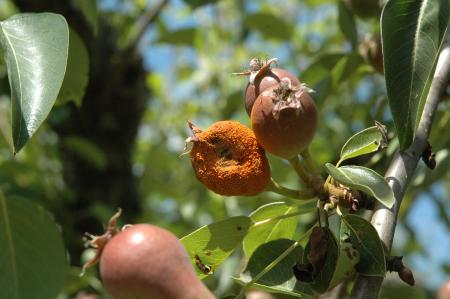
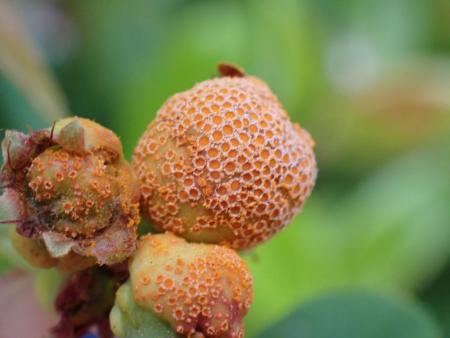
Young fruit become covered with yellowish to orange spots. Individual cup-shaped pustules may be visible. Fruits become deformed.
Species: Pacific Coast Pear Rust
Melodie Putnam, Oregon State University
Symptoms on Pear
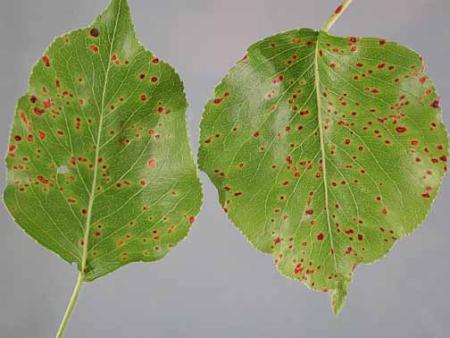
Pear leaves and stems may also display orange spots, though less so than fruit.
Species: Pacific Coast Pear Rust
"Incense Cedar Broom Rust (34026216400)" by Brendan Gunn is licensed under CC BY-SA 2.0
Symptoms on Incense-cedar
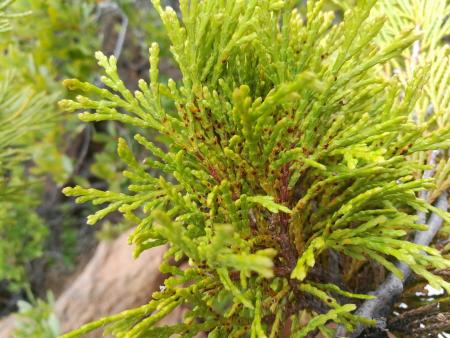
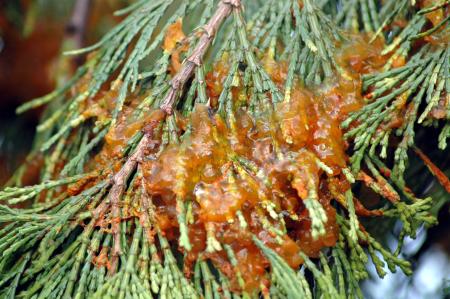
Incense-cedar is the alternate host for Pacific coast pear rust, also called cedar broom rust. The fruiting bodies form on the stems and foliage. They are difficult to spot.
Species: Pacific Coast Pear Rust
Jay Pscheidt, Oregon State University
Symptoms on Incense-cedar
In wet weather, the telia (fruiting bodies) swell to a jelly-like mass. In this form they are easy to see on the cedar branches.
Species: Pacific Coast Pear Rust
Jay Pscheidt, 1996 Oregon State University
Symptoms on Incense-cedar
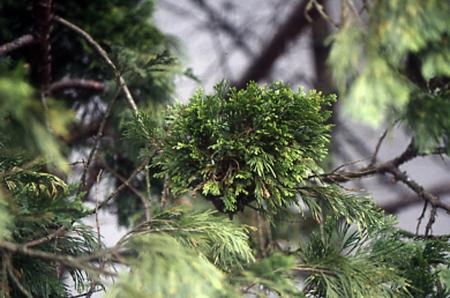
Infected branches may survive many years. Each spring they produce telia and spread the infection. The trees may develop witches brooms of congested growth.
Trellis or European Pear Rust
Species: Trellis rust
"Gymnosporangium sabinae a1 (2)" by Jerzy Opioła is licensed under CC BY-SA 4.0
Symptoms on Pear
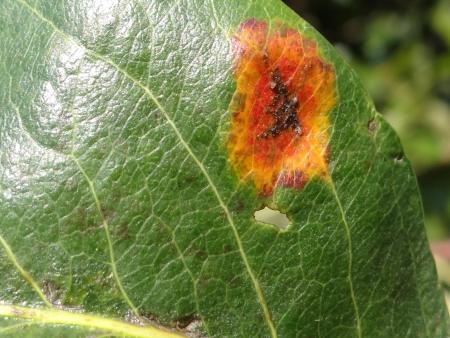
In spring and summer, bright yellow to orange spots form on the leaves. They can cover both sides of the leaves. They can also appear on fruit and branches. Leaves may drop early.
Species: Trellis rust
"Pear Rust - Gymnosporangium sabinae on Pyrus cf. pyraster" by Björn S... is licensed under CC BY-SA 2.0
Symptoms on Pear
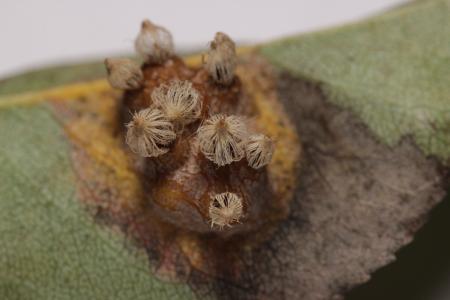
On the underside of the pear leaves, brown fruiting bodies called aecia form in June and into summer. They split vertically, resembling a trellis. They fall to the ground and infect juniper plants the next year.
Species: Trellis rust
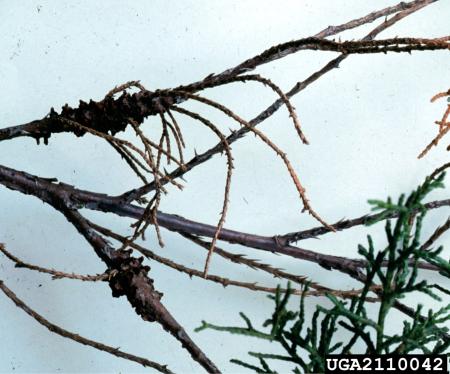
Petr Kapitola, Central Institute for Supervising and Testing in Agriculture, Bugwood.org
Symptoms on Juniper
Juniper is the alternate host for trellis rust. The disease is hard to detect. It causes narrow, swollen galls on older stems. Needles may be shed, leaving bare stems. Some twigs may die.
Species: Trellis rust
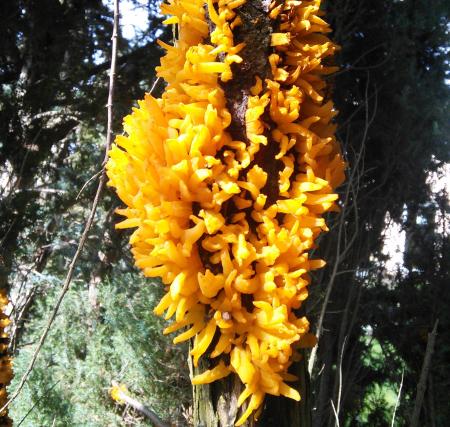
"Pear juniper rust 01" by Rilegator is licensed under CC BY-SA 3.0
Symptoms on Juniper
In early spring, wet weather causes the galls to sprout long, jelly-like telia. These are very visible on the juniper. They can continue to produce spores for several years.
Lookalikes: Pear Rust Mite, Apple Rust
Species: Pear Rust Mite
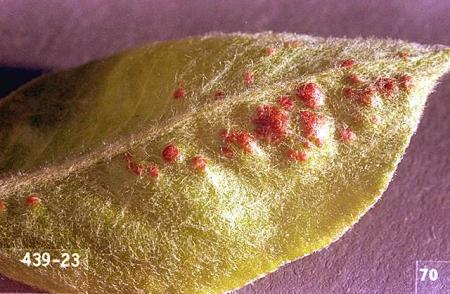
Ken Gray Insect Image Collection
The common pear rust or blister mite causes rows of reddish leaf blisters on either side of the mid-rib. These could be confused with fungal rust spots.
Species: Apple rust
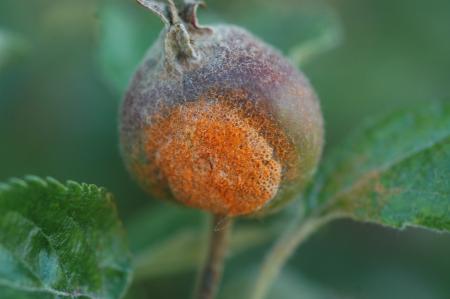
Jay Pscheidt, Oregon State University
Rust on apples can be caused by several Gymnosporangium species. In the PNW it is rare on fruiting apples. Some years favorable weather conditions will allow more apple infections.
Pear Rust Benefits
Rust is a plant disease that harms susceptible pear and apple plants. It doesn’t have any benefit for people or the environment.
Pear Rust Risks
- Rust can weaken infected plants and reduce the quality of the fruit.
Risk Card
Does it cause harm?
Adults & Children
None
Property
Some
Pets
None
Annoyance
Some
Environment
None
Action Depends on Context
Removing rust alternate hosts is important for orchards. It may not be feasible in residential areas.
TAKE ACTION?
Pear rusts impacts the appearance and productivity of pear trees. Take action if you can’t tolerate the damage.
Do I need to take action?
Rust infections are not likely to go away as long as there are alternate hosts available. If it is a problem for you, take action.
What if I do nothing?
- Rusts can spread among pears and other rose-family plants, and their alternate hosts.
- Damage may be minor, but severe infections can cause fruit loss and reduced growth.
- Plants with numerous infections can decline and may die.
Prevent Pear Rust
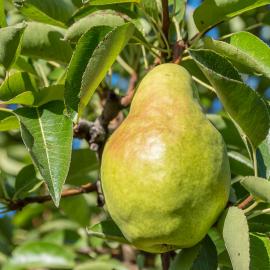
"Bartlett pear in tree" by Washington State Department of Agriculture is licensed under CC BY-NC 2.0
Plant resistant or less-susceptible varieties
- Most types of flowering, fruiting and Asian pears are susceptible to rust infections.
- Bartlett pears are somewhat less susceptible. Harrow Delight, Moonglow, and Seckel pears are moderately resistant to trellis rust.
- Many commonly-planted junipers are susceptible. Cultivars of Juniperus squamata, J. horizontalis, and J. communis are resistant.
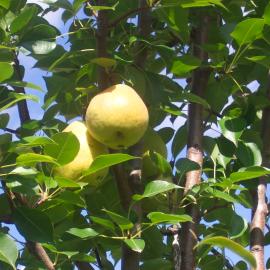
"Pear Tree" by Ed Bacchus is licensed under CC BY-NC-ND 2.0
Grow healthy trees
- Healthy trees are more resistant to infection. Keep them healthy with proper water and fertilization.
- Don’t purchase infected trees
- When buying new pear trees, only buy certified rust-free stock.
- Carefully examine new plants for signs of rust.
How to Manage Pear Rust
Non-chemical Methods
- Removal of alternate hosts is the only really effective means of controlling pear rust.
- Remove and destroy infected plant parts.
Chemical Methods
- Fungicides can be used to control pear rust when used according to the label instructions.
NEED HELP?
Consider a licensed pest control company. Learn How to Hire a Pest Control Company.
Your local Extension Specialist in Oregon and other states can suggest other methods.
Jump to
| Method | Does it work? | Is it safe? | Recommendation |
|---|---|---|---|
A Remove Alternate Hosts |
Very effective |
Low risk |
Recommended |
B Sanitation |
Somewhat effective |
Low risk |
Recommended |
C Manage with Fungicides |
Somewhat effective |
Moderate risk |
Use if Necessary |
|
D If Using Fungicides, Protect Yourself & Minimize Risks
|
A
Remove Alternate Hosts
Non-Chemical Method
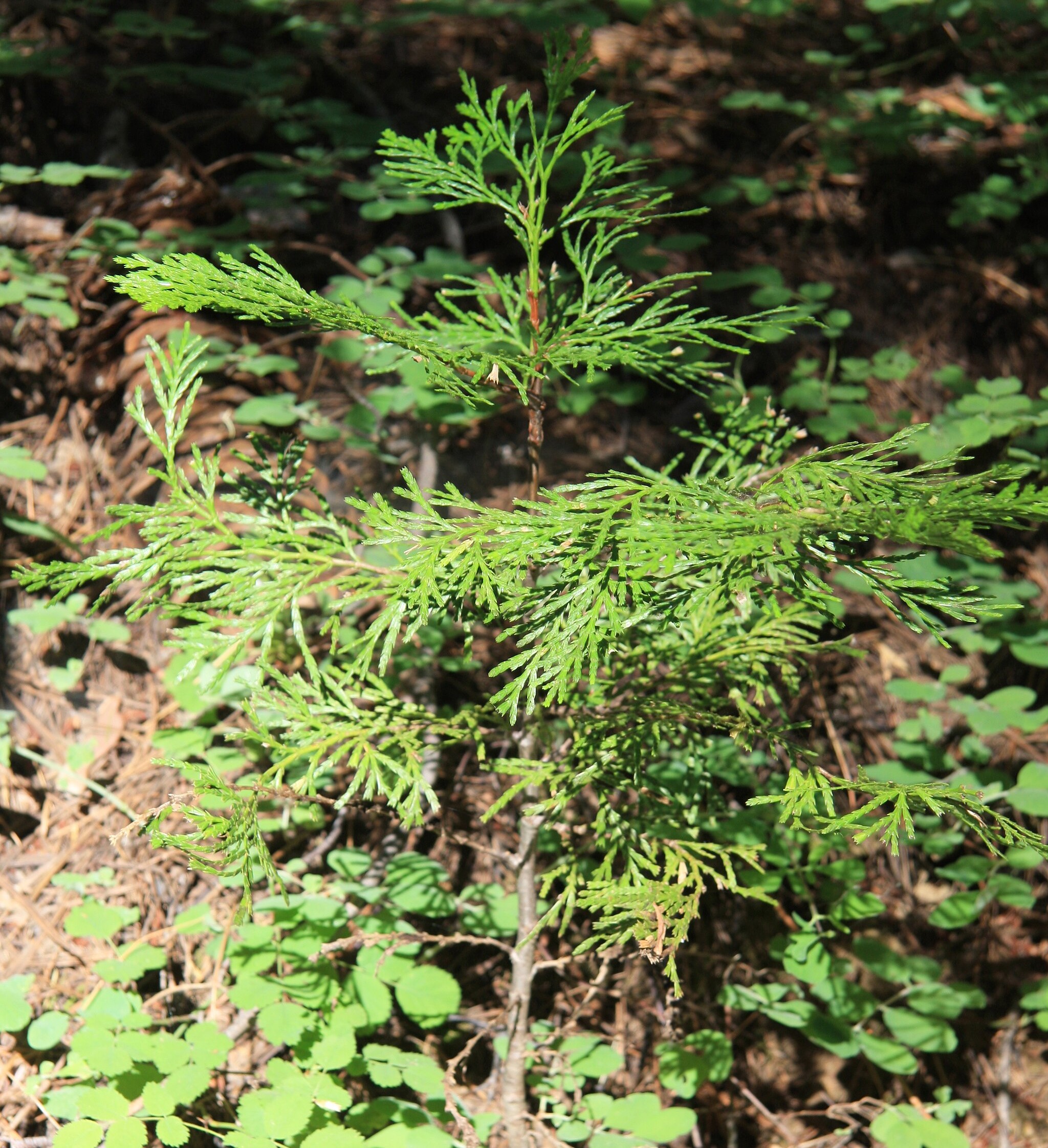
"File:Calocedrus decurrens sapling.jpg" by Dcrjsr is licensed under CC BY 3.0
Remove Alternate Hosts
Recommended
Remove Alternate Hosts
Removing alternate hosts is the only really effective means of controlling pear rust. Spores are blown long distances by wind. In a residential area, this may not be practical.
For trellis rust, if possible remove all junipers within 1,000 feet.
For Pacific coast rust, if possible remove incense cedar trees from within 0.5 to 2 miles. An incense cedar seedling, such as might grow in a yard, is pictured.
| Does it work? | Very effective |
| How much effort? | High effort |
| What's the risk? | Low risk |
| Possible risk of exposure or harm from chemicals | NONE |
B
Sanitation
Non-Chemical Method
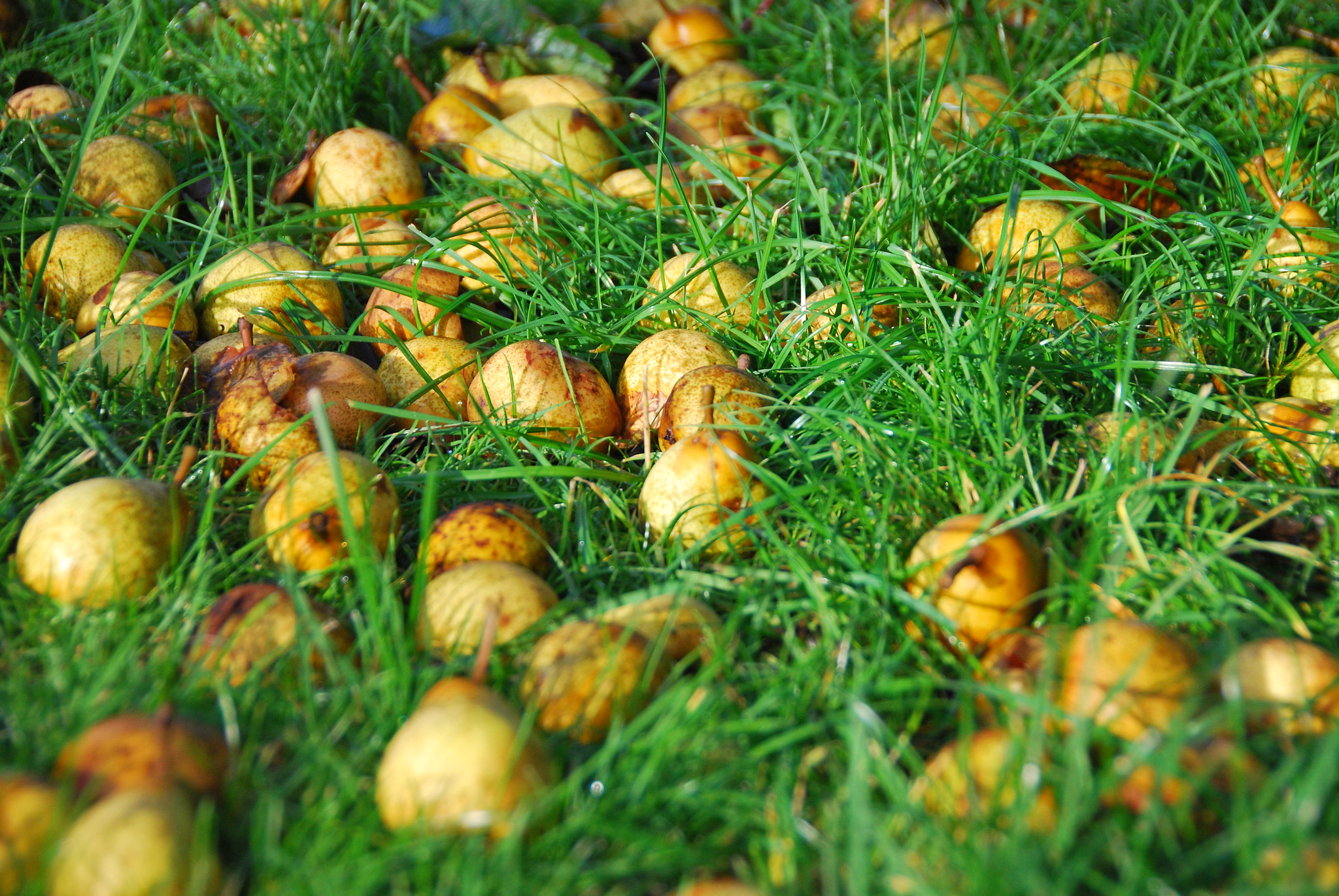
"4/10.2012 - fallen" by julochka is licensed under CC BY-NC 2.0
Sanitation
Recommended
Sanitation
Collect fallen fruit and leaves. Remove and dispose of infected plant parts. If needed, prune out infected branches.
| Does it work? | Somewhat effective This can slow down disease transmission. It will not stop the disease if infected alternate hosts are nearby. |
| How much effort? | Moderate effort |
| What's the risk? | Low risk |
| Possible risk of exposure or harm from chemicals | NONE |
Weston Miller, Oregon State University
C
Manage with Fungicides
Chemical Method: Use with caution
iStock
Manage with Fungicides
Use if Necessary
Some fungicides are listed in PICOL for the control of rusts on pear. These may offer some level of protection.
| Does it work? | Somewhat effective |
| How much effort? | Moderate effort |
| What's the risk? | Moderate risk |
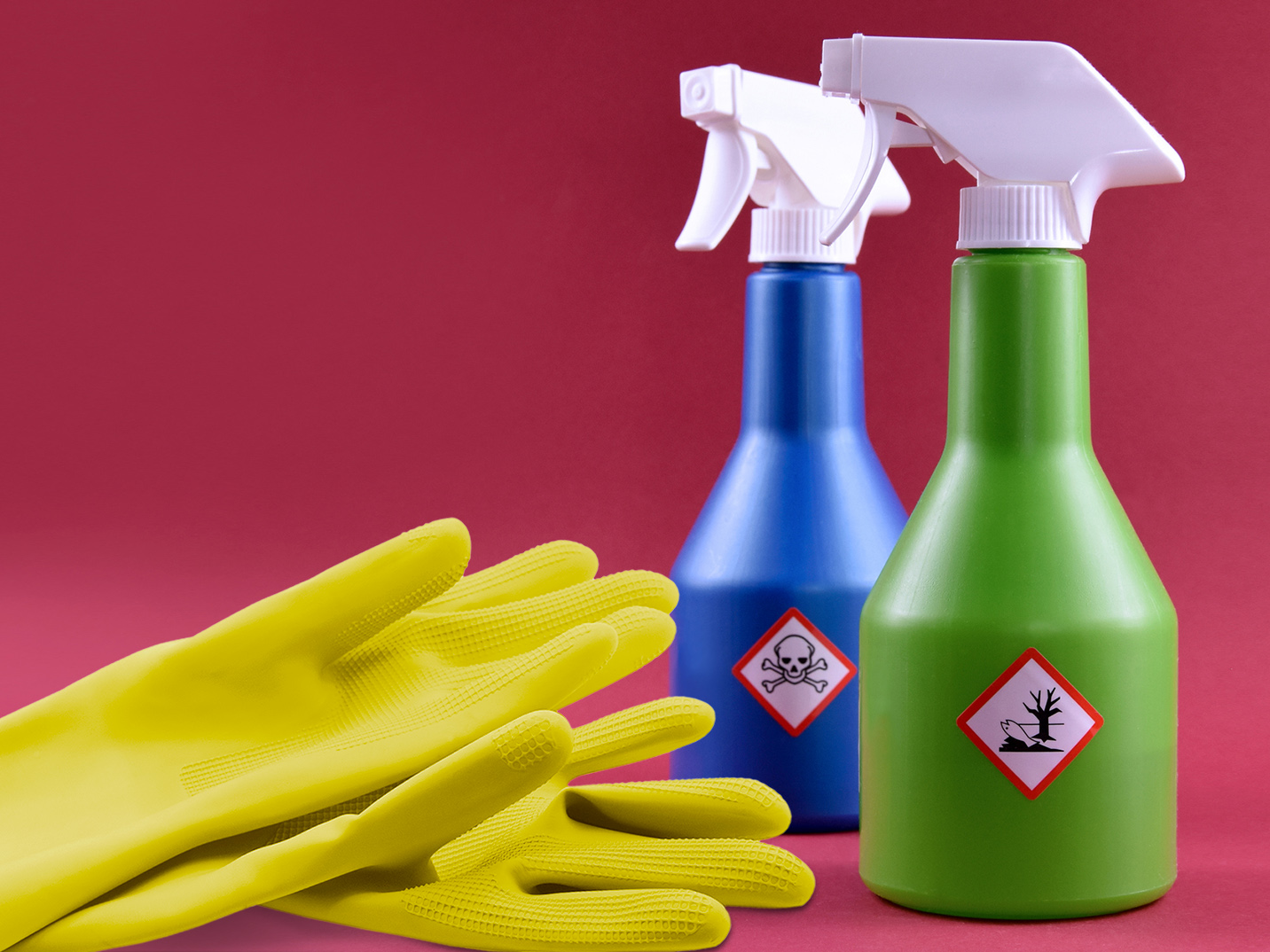
| Possible risk of exposure or harm from chemicals | Using fungicides includes some amount of risk. The lowest risk comes with using alternative methods. You may be exposed to a fungicide if you:
Follow directions closely to reduce risk. |
Some general fungicides are listed in PICOL for home use. A few are listed below. These fungicides used for the control of rusts on pear may offer some protection. The active ingredients are available alone or in products containing more than one. Look for these chemical names in the “Active Ingredients” section of product labels.
- Neem oil, clarified hydrophobic extract
- Sulfur
- Pyrethrin
- Mineral oil
- Copper octanoate
- Myclobutanil (for apples only)
Suggested pesticides are from the Pesticide Information Center Online (PICOL) Database. They are permitted for HOME use in Oregon. Read the label for application directions and effectiveness information.
ONLY professional pesticide applicators can use Restricted-Use Pesticides (RUP) that may be more effective. If you need further support, contact a licensed pesticide applicator.
Fungicide Application Tips
- For Pacific coast pear rust, apply fungicide when the orange telia on incense cedar trees are swollen. In western Oregon this is usually in early spring, during bloom.
- Using fungicides comes with real risks. ALWAYS read the entire label front to back. Review instructions even for brands you know.
If Using Fungicides, Protect Yourself & Minimize Risks
Chemical Method: Use with Caution
Weston Miller, Oregon State University
Why Is It Important to Read Fungicide Product Labels?
- They have detailed information on how to use the product correctly and legally.
- They contain information on potential hazards of the product.
- They provide instructions you should follow for poisonings and spills.
- Following label instructions helps you to minimize the risks and maximize the benefits.
Key Fungicide Safety Tips
- Read the entire label front to back.
- Follow the instructions.
- Review the instructions even for brands you know.
- Only apply the product where the label says it can be applied.
- Keep all fungicides in their original container.
The Label is the Law
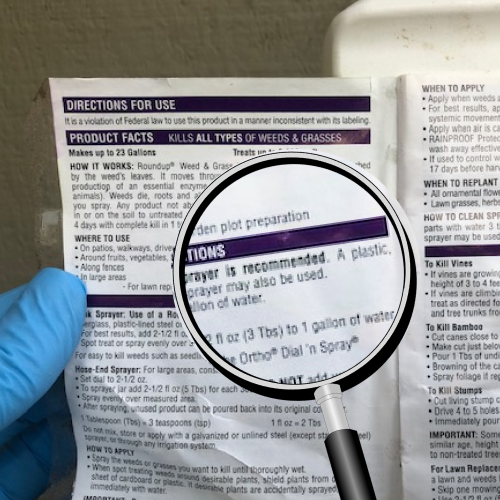
ALWAYS read the label before using fungicide products. The label is a legal document that provides information on how to safely use the fungicide. It includes required personal protective gear and application methods. This helps avoid harm to human health and the environment. Using a fungicide in ways not listed on the label is illegal. It can result in legal enforcement actions.
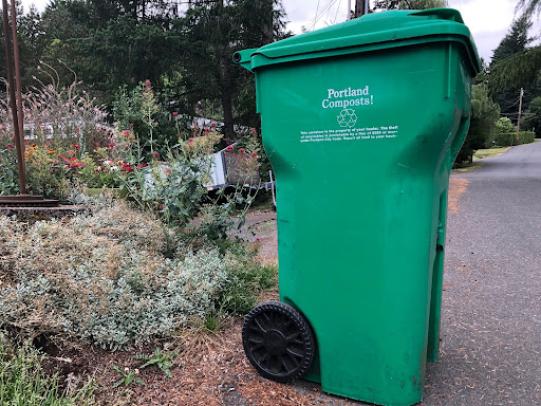
READ THE LABEL & Follow Instructions
It has instructions to protect you and the environment.
- Labels are different for every product and they often change over time.
- Use a magnifying glass for small print.
- Pay attention to CAUTION, WARNING, and DANGER statements.
- Pay attention to the PRECAUTIONARY STATEMENTS.
- The law states you must read and follow fungicide instructions.
Protect Yourself
Eye, skin & lung irritants
- Wear the right protective gear. This often includes, but is not limited to: a long-sleeved shirt, pants, socks, closed shoes, safety glasses, and chemical-resistant gloves.
- Mix fungicide products outdoors or in a well-ventilated area.
- Wash hands after you mix or apply fungicides and before smoking or eating.
- Wash clothes worn while mixing and applying fungicides separately from all other laundry.
Protect Children & Pets
Children and pets are at risk if they eat or touch the plant before fungicides dry.
- Keep them away during and after applying fungicides (read label for how long).
- Remove toys and pet dishes from the yard before applying.
- Don’t track fungicide products into home on shoes or clothes.
Protect Pollinators
- Apply early morning or evening when bees are less active.
- Avoid spraying flowering plants, if possible.
- Don’t spray on bees or insects.
Storage & Disposal
- Store out of the reach of children and pets.
- Store in a cool and dry place.
- Never pour down any drain.
- If you mix too much, apply it according to the label rather than storing it.
- Don’t put fungicide containers in the trash unless instructed by the label.
- Take unused fungicides to a hazardous waste facility.
Call 1-800-CLEANUP (1-800-253-2687) to find out where to dispose of pesticides.
For the Portland metro region in Oregon, contact Metro’s Recycling Information. Call 503-234-3000, email or visit Metro’s website
More about:
About Using Pesticides on School Grounds in Oregon
If using pesticides on school grounds, there are special rules in Oregon. See School Integrated Pest Management (Oregon Department of Agriculture).
NEED HELP?
The National Pesticide Information Center (NPIC) can answer questions about pest control chemicals.
1-800-858-7378 or npic@ace.orst.edu
Consider using a licensed pest or weed control company. Learn How to Hire a Pest Control Company.
Your local Extension Specialist in Oregon and other states can suggest other methods.
Content developed by Signe Danler and reviewed by Thomas A. Jima. Pesticide safety information edited by Kaci Buhl.
Peer review facilitated by OSU Department of Horticulture.



Apple/Pear Rust References
Pear (Pyrus spp.)-Trellis Rust (European Pear Rust)
Pear (Pyrus spp.)-Pacific Coast Pear Rust
Juniper (Juniperus spp.)-Pear Trellis Rust
Cedar, Incense-Broom Rust
PNW Pest Management Handbooks
Incense Cedar Rust | Forest Pathology
Forest Pathology
Pear: Pacific Coast pear rust
Pear: Pear trellis rust
WSU Extension