
-
Pest SolutionsPESTS + WEEDSUSING PESTICIDES OR HERBICIDES?

I should be a large image.
Powdery Mildew on Vegetables
Erysiphe spp., Leveillula taurica
Updated Sep 04, 2026
Make a Positive Identification
- Powdery mildew is a fungus that causes a white, powdery growth on many common vegetables.
- The first sign is small white or yellowish spots on leaves.
- It grows best in warm, moist or dry (but not wet) conditions.
- In Oregon powdery mildew first appears in spring and early summer. It can continue through early autumn.
- In western Oregon, it can occur year-round in cold frames or greenhouses.
Species: Powdery mildew, tomato
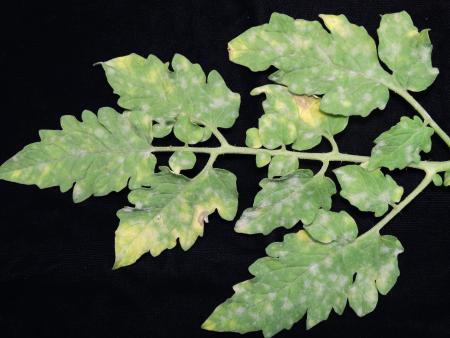
"Tomato: Powdery mildew" by Plant pests and diseases is marked with CC0 1.0
Tomato
Leaves develop light green to yellow blotches on the upper surface. This may be followed by a white powdery mass that spreads to cover entire leaf surfaces. Powdery mildew on tomatoes is caused by the fungus species Leveillula taurica and Oidium neolycopersici.
Species: Powdery mildew, tomato
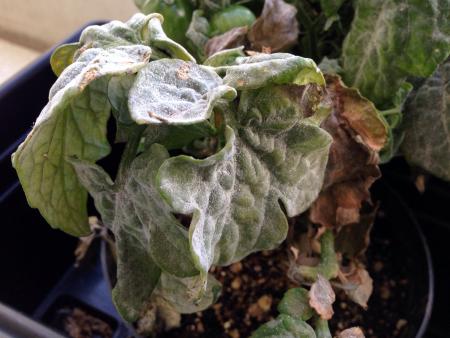
"Tomato (Solanum lycopersicon): Powdery mildew" by Plant pests and diseases is marked with CC0 1.0
Severe powdery mildew infections can deform or kill leaves, as seen in this tomato photo.
Species: Powdery mildew, cucurbits
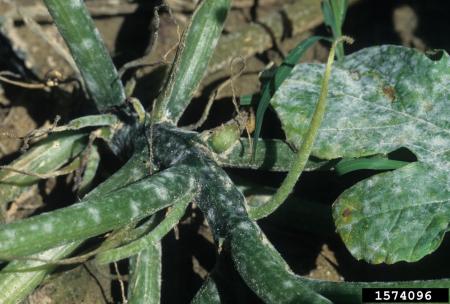
Gerald Holmes, Strawberry Center, Cal Poly San Luis Obispo, Bugwood.org
Cucurbits: Cucumber, Squash, Melon, Pumpkin and others
White spots appear on leaves and stems. They can expand and cover all surfaces. This reduces photosynthesis and harms plant growth. Leaves may turn brown and die. This can allow sunscald damage to fruits. Warm, moist conditions favor powdery mildew growth. It often spreads towards the end of the growing season. Powdery mildew on cucurbits is caused by the fungus species Golovinomyces cucurbitacearum, Podosphaera xanthii, and Leveillula taurica.
Species: Powdery mildew, brassicas
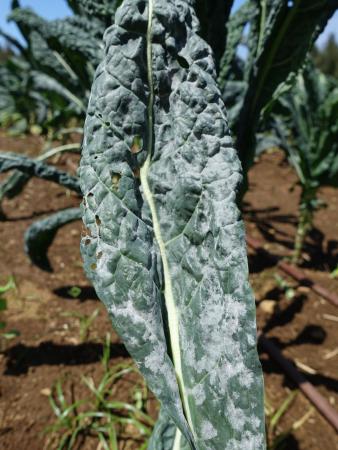
"Kale: Powdery mildew" by Plant pests and diseases is marked with CC0 1.0
Brassicas: Kale, Brussels Sprouts and others
Small white spots appear on top and bottom of leaves. They become a powdery mass that spreads to cover entire leaf surfaces. Leaves turn yellow and brown, die, and drop from the plant. Stressed plants are more susceptible. Older leaves may be affected first. Powdery mildew on brassicas is caused by the fungus species Erysiphe cruciferarum.
Species: Powdery mildew, lettuce
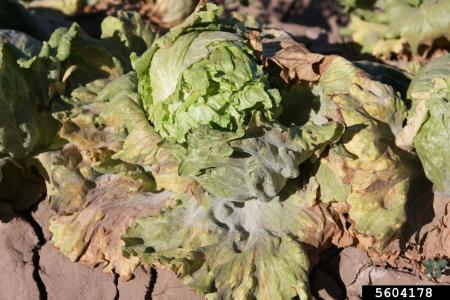
Gerald Holmes, Strawberry Center, Cal Poly San Luis Obispo, Bugwood.org
Lettuce
Small white spots appear on top and bottom of leaves. They become a powdery mass that spreads to cover entire leaf surfaces. Older leaves are typically infected first. Leaves turn yellow, then brown, and die. Powdery mildew on lettuce is caused by the fungus species Golovinomyces cichoracearum.
Lookalikes: Downy Mildew, Natural Markings on Squash Leaves
Species: Downy mildew
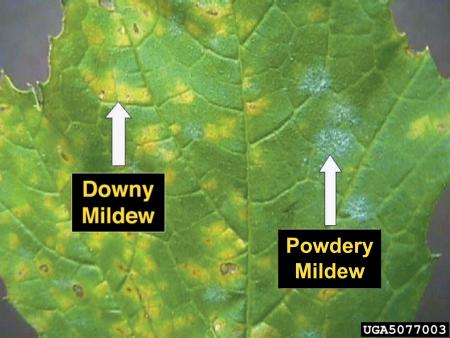
David B. Langston, University of Georgia, Bugwood.org
Downy mildew can cause yellowish areas on the top of the leaf. They may resemble early powdery mildew. The underside will have a fuzzy white or gray growth.
Powdery mildew can show similar whitish, powdery spots. They can appear on both sides of the leaf, and on stems.
Downy mildew prefers cooler conditions than powdery mildew.
Species: Natural markings on squash leaves
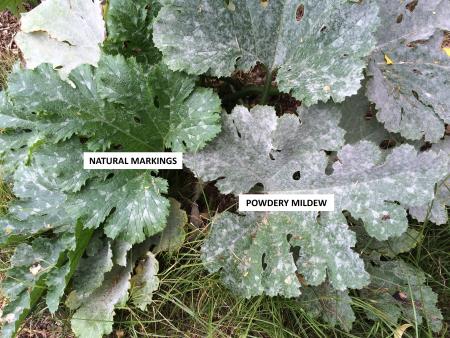
"Squash: Powdery mildew" by Plant pests and diseases is marked with CC0 1.0
Some varieties of squash naturally have white markings on their leaves. These are not fuzzy, and are not powdery mildew.
Powdery Mildew on Vegetables Benefits
Powdery mildew is a plant disease that damages many types of vegetables. It doesn’t have any benefit for people or the environment.
Powdery Mildew on Vegetables Risks
- Powdery mildew causes damage to edible plant parts, making them unusable.
- It damages leaves, distorting new growth. The plants may be stunted or die.
- It can winter over on plant parts and infect new plants when conditions are right the next year.
Risk Card
Does it cause harm?
Adults & Children
None
Property
Low
Pets
None
Annoyance
Some
Environment
None
Action Optional
Take Action?
Powdery mildew interferes with the proper functioning of leaves. It impairs plant growth and vegetable production.
Do I need to take action?
Powdery mildew is caused by many different fungus species. Most infect a specific plant species or group of species. An infection in one type of vegetable will only spread to others in that group. This can affect management decisions.
If a severe infection occurs every year, you should take steps to control it.
What if I do nothing?
Severe infections can weaken or kill plants. It can reduce harvest quality and yield. It should be treated.
Prevent Powdery Mildew on Vegetables
"Squash Plants" by Numinosity by Gary J Wood is licensed under CC BY-SA 2.0
Plant Resistant Cultivars and Species
Many vegetable varieties have been bred to resist powdery mildew. Planting them is the best way to avoid powdery mildew infection.
- Butterhead lettuce is generally more resistant than crisphead.
- A few varieties of tomato have some resistance. They include Geronimo, Granadero, Indigo Rose, Massada, and Striped Stuffer.
- The PNW handbooks list resistant varieties of Cantaloupe, Cucumbers and Squash
Signe Danler, Oregon State University
Plant in Sunny Areas with Good Air Circulation
Disease development is favored by moist, mild weather. Shady areas, cloudy conditions and dense planting also promote it.
- Grow plants in sunny locations
- Orient the plantings to minimize shading
- Space plants far enough apart for air and light to penetrate
- Avoid poorly drained soils and shady damp areas
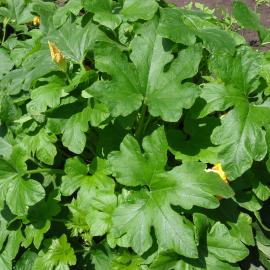
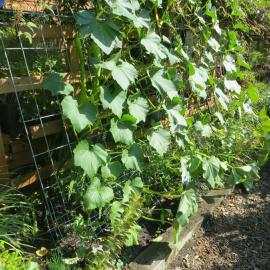
- Some plants like cucurbits and tomatoes can be grown on a trellis, as in the photo. This improves air circulation.
- Prune excess suckers of tomatoes to increase air circulation
Signe Danler, Oregon State University
Don't Apply Excess Fertilizer
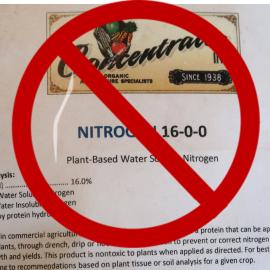
- Too much Nitrogen fertilizer causes flushes of succulent new growth
- This tender growth is more susceptible to powdery mildew
Leslie J. Mehrhoff, University of Connecticut, Bugwood.org
Control Weeds
- Manage weeds that can harbor powdery mildew
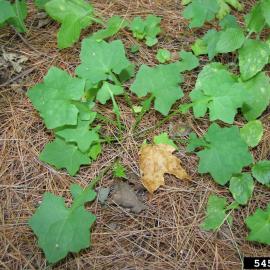
- The wall lettuce (Lactuca muralis) weed shown has powdery mildew. It could spread to cultivated lettuce.
Rotate Crops
- Don’t plant the same crop in the same location year after year
How to Manage Powdery Mildew on Vegetables
- Prevention is the most effective way to avoid powdery mildew damage.
Early detection
- Inspect plants early during growth.
- The timing and severity of infection will be affected by weather conditions and plant susceptibility.
Non-chemical Methods
- Remove diseased plant parts and heavily-infected plants.
- Use a hose to wash spores off infected plants and reduce the infection.
Chemical Methods
- Fungicides may effectively prevent powdery mildew when used according to label directions.
- Fungicides must be applied before plants develop disease symptoms to work.
NEED HELP?
Consider a licensed pest control company. Learn How to Hire a Pest Control Company.
Your local Extension Specialist in Oregon and other states can suggest other methods.
Jump to
| Method | Does it work? | Is it safe? | Recommendation |
|---|---|---|---|
A Remove infected plant parts |
Effective |
Low risk |
Recommended |
B Water Bath |
Somewhat effective |
Low risk |
Use if Necessary |
C Control with Fungicides |
Effective |
Moderate risk |
Use if Necessary |
|
D If Using Fungicides, Protect Yourself & Minimize Risks
|
A
Remove infected plant parts
Non-Chemical Method
Weston Miller, Oregon State University
Remove infected plant parts
Recommended
- Prune off infected plant parts as soon as they appear.
- Late in the season, remove heavily-infected plants.
- At the end of the season, clear away all plant debris.
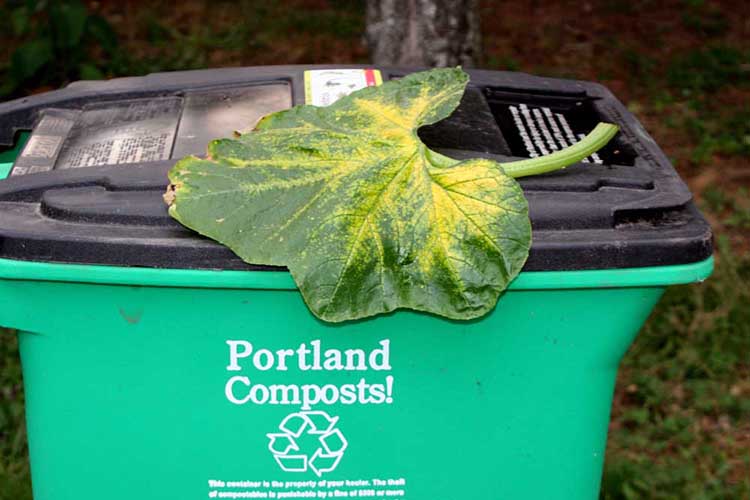
- Bury plant parts or bag them and discard. Do not put in home compost.
- Clean your tools after using on infected plants.
| Does it work? | Effective |
| How much effort? | Moderate effort |
| What's the risk? | Low risk |
| Possible risk of exposure or harm from chemicals | NONE |
C
Control with Fungicides
Chemical Method: Use with caution
iStock
Control with Fungicides
Use if Necessary
| Does it work? | Effective
|
| How much effort? | Moderate effort |
| What's the risk? | Moderate risk Using fungicides comes with real risks. ALWAYS read the entire label front to back. Review instructions even for brands you know. |
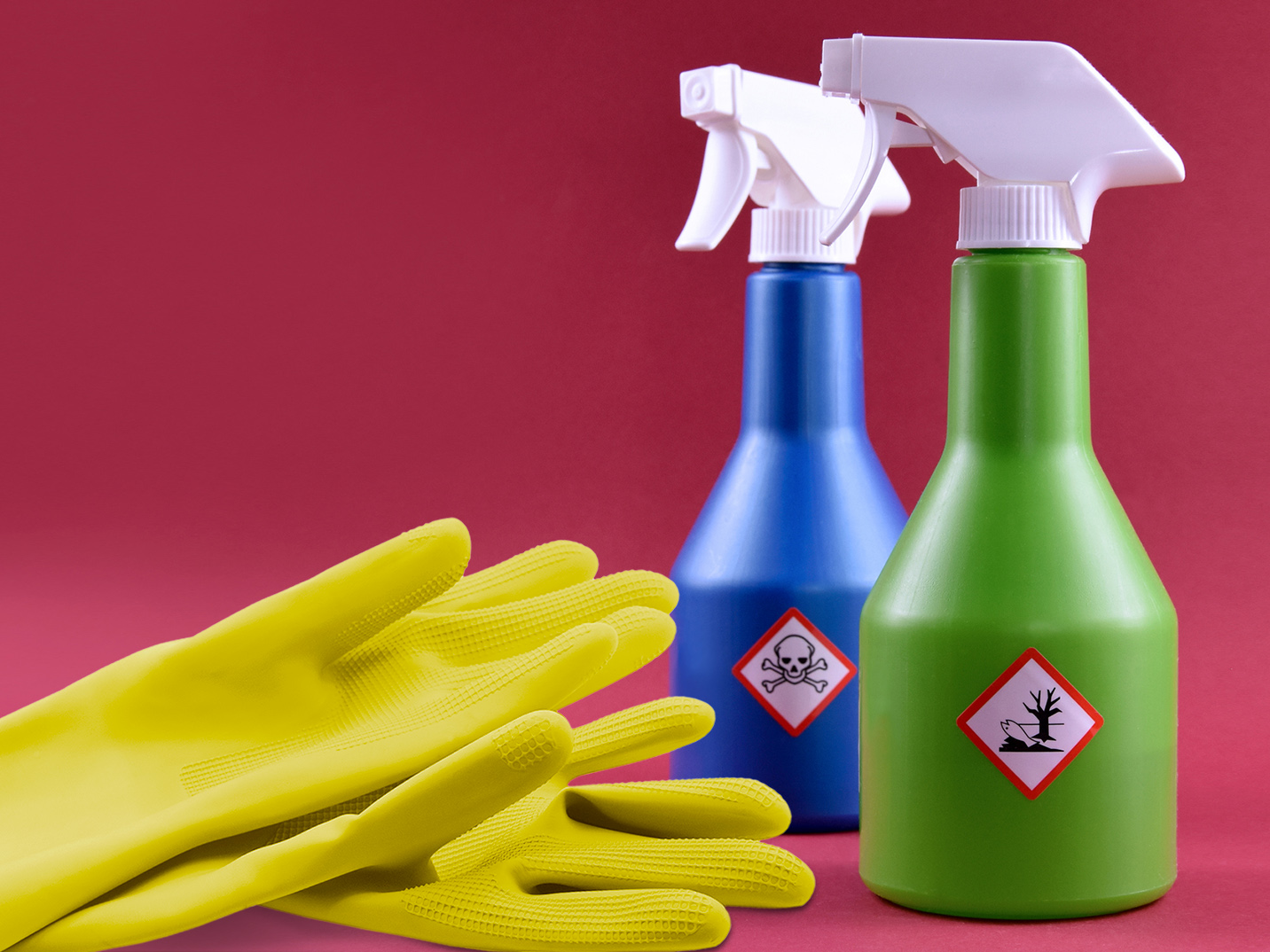
| Possible risk of exposure or harm from chemicals | Using fungicides includes some amount of risk. The lowest risk comes with using alternative methods. You may be exposed to a fungicide if you:
Follow directions closely to reduce risk. |
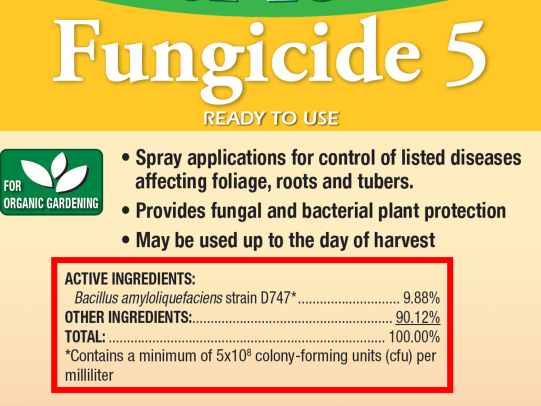
Some fungicides are available for home use. A few are listed below. These active ingredients are available alone or in products containing more than one. They are effective chemical treatments for powdery mildew on various vegetables. Look for these chemical names in the “Active Ingredients” section of product labels.
- Bacillus amyloliquefaciens, strain d747
- Natural oils: Canola, Mineral (Organic formulations available)
- Plant essential oils: Cinnamon, geraniol, peppermint, rosemary (Organic formulations available)
- Potassium salts of fatty acids (Potassium laurate) (Organic formulations available)
- Sulfur
Suggested pesticides are from the Pesticide Information Center Online (PICOL) Database. They are permitted for HOME use in Oregon. Read the label for application directions and effectiveness information. Refer to PICOL for products formulated for specific vegetable crops.
ONLY professional pesticide applicators can use Restricted-Use Pesticides (RUP) that may be more effective. If you need further support, contact a licensed pesticide applicator.
Fungicide Application Tips
- Fungicides are not usually needed for powdery mildew on vegetables.
- If you use fungicides, apply when temperatures are between 50° and 80° F. Do NOT apply when foliage is wet, or when plants are heat stressed.
- Completely cover all growing plant parts with spray.
- Powdery mildew can become resistant to a fungicide active ingredient (AI) if it is always used.
- Researchers recommend alternating AIs that have different ways to kill or stop the fungal growth.
- Using fungicides comes with real risks. ALWAYS read the entire label front to back. Review instructions even for brands you know.
If Using Fungicides, Protect Yourself & Minimize Risks
Chemical Method: Use with Caution
Weston Miller, Oregon State University
Why Is It Important to Read Fungicide Product Labels?
- They have detailed information on how to use the product correctly and legally.
- They contain information on potential hazards of the product.
- They provide instructions you should follow for poisonings and spills.
- Following label instructions helps you to minimize the risks and maximize the benefits.
- Products may not work if label directions not followed.
Key Fungicide Safety Tips
- Read the entire label front to back.
- Follow the instructions.
- Review the instructions even for brands you know.
- Only apply the product where the label says it can be applied.
- Keep all fungicides in their original container.
The Label is the Law
ALWAYS read the label before using fungicide products. The label is a legal document that provides information on how to safely use the fungicide. It includes required personal protective gear and application methods. This helps avoid harm to human health and the environment. Using a fungicide in ways not listed on the label is illegal. It can result in legal enforcement actions.
READ THE LABEL & Follow Instructions
It has instructions to protect you and the environment.
- Labels are different for every product and they often change over time.
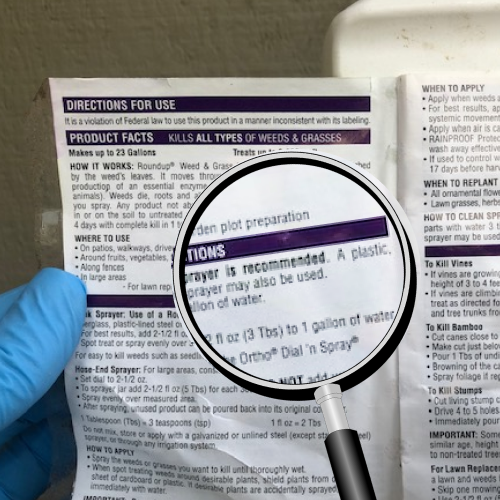
- Use a magnifying glass for small print.
- Pay attention to CAUTION, WARNING, and DANGER statements.
- Pay attention to the PRECAUTIONARY STATEMENTS.
- The law states you must read and follow fungicide instructions.
Protect Yourself
Eye, skin & lung irritants
- Wear the right protective gear. This often includes, but is not limited to: a long-sleeved shirt, pants, socks, closed shoes, safety glasses, and chemical-resistant gloves.
- Mix fungicide products outdoors or in a well-ventilated area.
- Wash hands after you mix or apply fungicides and before smoking or eating.
- Wash clothes worn while mixing and applying fungicides separately from all other laundry.
Protect Children & Pets
Children and pets are at risk if they eat or touch the plant before fungicides dry.
- Keep them away during and after applying fungicides (read label for how long).
- Remove toys and pet dishes from the yard before applying.
- Don’t track fungicide products into home on shoes or clothes.
Protect Pollinators
- Apply early morning or evening when bees are less active.
- Avoid spraying flowering plants, if possible.
- Don’t spray on bees or insects.
Storage & Disposal
- Store out of the reach of children and pets.
- Store in a cool and dry place.
- Never pour down any drain.
- If you mix too much, apply it according to the label rather than storing it.
- Don’t put fungicide containers in the trash unless instructed by the label.
- Take unused fungicides to a hazardous waste facility.
Call 1-800-CLEANUP (1-800-253-2687) to find out where to dispose of pesticides.
For the Portland metro region in Oregon, contact Metro’s Recycling Information. Call 503-234-3000, email or visit Metro’s website
More about:
About Using Pesticides on School Grounds in Oregon
If using pesticides on school grounds, there are special rules in Oregon. See School Integrated Pest Management (Oregon Department of Agriculture).
NEED HELP?
The National Pesticide Information Center (NPIC) can answer questions about pest control chemicals.
1-800-858-7378 or npic@ace.orst.edu
Consider using a licensed pest or weed control company. Learn How to Hire a Pest Control Company.
Your local Extension Specialist in Oregon and other states can suggest other methods.
Content developed by Signe Danler and reviewed by Thomas A. Jima. Pesticide safety information edited by Kaci Buhl.
Peer review facilitated by OSU Department of Horticulture.



POWDERY MILDEW ON VEGETABLES REFERENCES
Powdery Mildew Diseases
Cucumber Powdery Mildew
Tomato Powdery Mildew
and other specific vegetables in the
PNW Pest Management Handbooks
Powdery Mildew on Vegetables
University of California IPM
Cucumber, Pumpkin, Squash: Powdery mildew
Cantaloupe, Melons: Powdery mildew
Washington State University Hortsense
Disease-resistant Tomato Varieties
Cornell University