
-
Pest SolutionsPESTS + WEEDSUSING PESTICIDES OR HERBICIDES?

I should be a large image.
Spotted Wing Drosophila (SWD)
Drosophila suzukii
Updated Aug 19, 2026
Make a Positive Identification
- Spotted wing drosophila (SWD) are tiny fruit flies.
- They feed on a wide variety of fruits including stone tree fruits and berries.
- The larvae feed within the fruits causing brown, sunken areas.
- Feeding damage may not show until after crops are harvested.
Species: Spotted Wing Drosophila
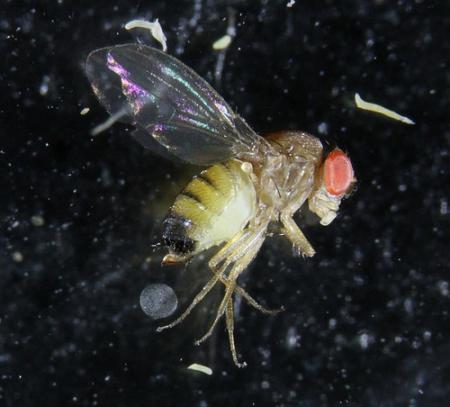
Vaughn Walton, Oregon State University
Adults are 1/12 to 1/8 inch (2-3 mm) long. They are yellowish-brown with dark-colored bands on the abdomen. They have prominent red eyes.
Species: Spotted Wing Drosophila
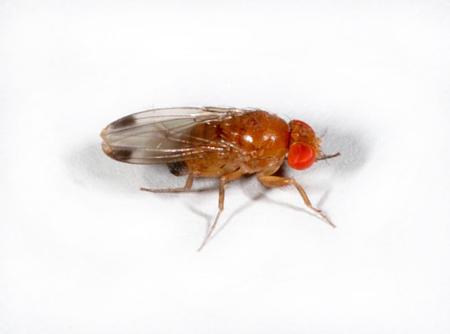
"Spotted wing drosophila" by Oregon State University is licensed under CC BY-SA 2.0
Male flies have clear wings with a dark spot near the tip of each of wing.
Species: Spotted Wing Drosophila
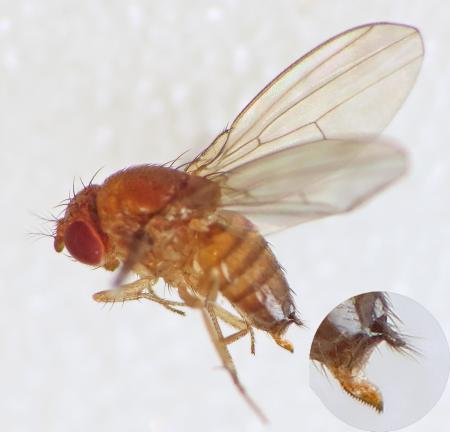
"Spotted-wing Drosophila (Drosophila suzukii) female" by Martin Cooper Ipswich is licensed under CC BY 2.0
Female flies have clear wings with no spot. They have a large, sawlike ovipositor for laying eggs in fruit. The ovipositor can't be seen with the naked eye.
RECOGNIZE FRUIT DAMAGE
Species: SWD Damage
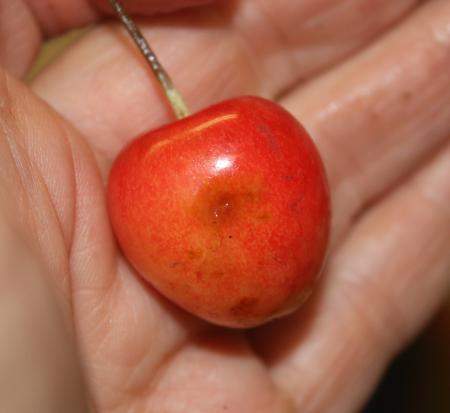
Amy Dreves, Oregon State University
To recognize SWD damage, look for spotting or softening on the fruit surface. Liquid may ooze out of the egg hole when the fruit is squeezed.
Species: SWD Damage
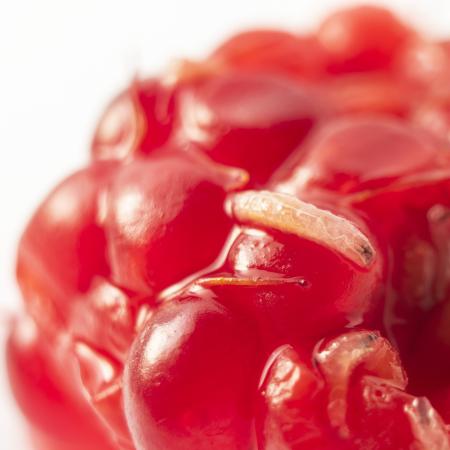
"Spotted Wing Drosophila" by peterlcoffey is licensed under CC BY-NC 2.0
If infested fruit is opened, small white larvae and pupae can be seen with naked eye
Species: SWD egg
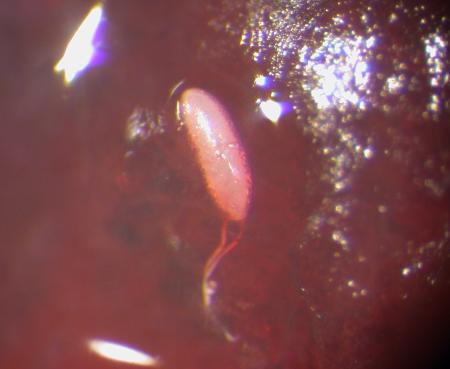
"SWDEgg" by uacescomm is licensed under CC BY-NC 2.0
A white egg within the fruit. Two hair-like filaments can sometimes be seen under magnification.
LOOK-ALIKES: VINEGAR FLIES
Species: Vinegar fly
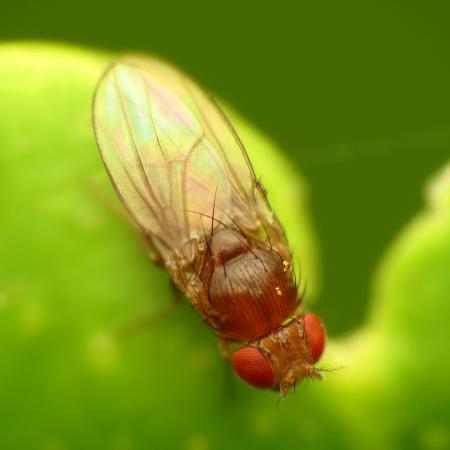
"Vinegar Fly" by treegrow is licensed under CC BY 2.0
Common vinegar fly males have red eyes like SWD, but no wing spots. Identifying females needs a close look at the ovipositor. That may not be possible with the naked eye.
Spotted Wing Drosophila (SWD) Benefits
Spotted wing drosophila are a food source for insect predators such as ants, spiders, minute pirate bugs, yellow jackets, lacewing larvae and parasitoid wasps.
Spotted Wing Drosophila (SWD) Risks
- Spotted wing drosophila attacks healthy ripening fruit as well as damaged or split fruit.
- In backyard fruit crops, SWD flies and damage may be overlooked. Damage may only be noticed when the fruit is being harvested.
- Populations can grow rapidly and cause severe damage to a crop.
Risk Card
Does it cause harm?
Adults & Children
None
Infested fruit that is not moldy or fermented is safe to eat. There is no known risk to human health from eating SWD.
Property
Low
Pets
None
Annoyance
Some
Environment
None
Action Optional
Take Action?
Minor SWD damage is bothersome but not harmful. Severe damage, especially to commercial crops, can cause economic losses.
Do I need to take action?
- You may ignore minor damage.
- If an infestation is minor, infested fruit can be made into wine or jelly.
What if I do nothing?
- A minor infestation could get worse each year.
- Severe infestations can cause the loss of a harvest.
- During severe infestations, fruit is too rotten to be processed.
Prevent Spotted Wing Drosophila
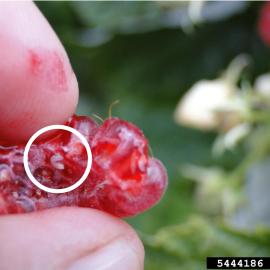
Fruit Monitoring
- When fruit begins to develop color, start checking for damage. Continue monitoring until fruit is harvested.
- Look for prematurely rotting fruit or punctures created when the female lays eggs. A magnifying glass will help you see punctures.
- Gently squeeze the fruit to see if juice leaks from the small punctures.
- Break open suspect fruit to see if small, white larvae are inside.
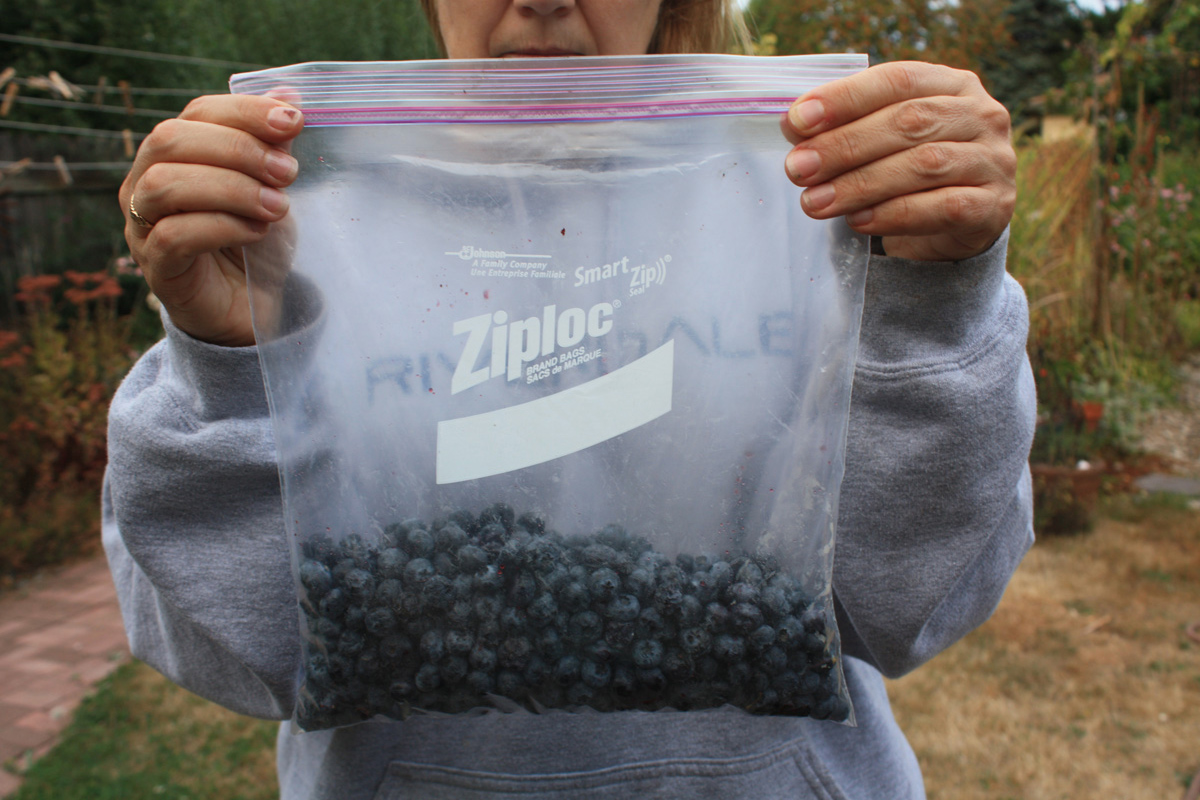
- Dissolve 1 cup salt in 1 gallon water. Put crushed fruit in a plastic bag with the mixture. The larvae will float to the surface within about 15 minutes.
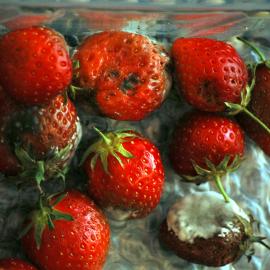
"when the rot sets in" by Nathan deGargoyle is licensed under CC BY-NC-SA 2.0
Sanitation
- Don't allow fruit to rot in the field. Remove and destroy any fallen, damaged, and overripe fruit.
- Don't compost or bury infested fruits.
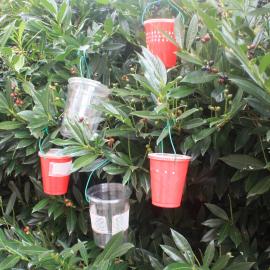
"placetrap001TW" by Tiffany Woods, Oregon State University is licensed under CC BY-SA 2.0
Trapping (Monitoring method)
- Trapping is a good way to determine if SWD are present around your crops. It will not reduce populations very much.
- Construct a simple homemade trap using an 8 to 32 ounce size container with a removable lid. It can be clear or red.
- Drill 3/16 inch holes around the middle of the cup to allow SWD to enter. Leave an undrilled strip on one side to avoid spills when changing the bait solution.
- Add 1-2 inches of apple cider vinegar. Add a drop of unscented liquid soap to break the surface tension so that flies sink more easily.
- An alternative is 2 teaspoons of dry baker's yeast, 4 teaspoons of sugar, and 1.5 cups of warm water. This bait catches even more flies, but is messier.
- A yellow sticky trap can be added in the container to aid in capturing the flies.
- Effective commercially available traps and lures are available.
- Place or hang traps in shade near the fruit. Check at least twice per week. Re-fill the trap weekly.
- Look for male SWD adults with spotted wings.
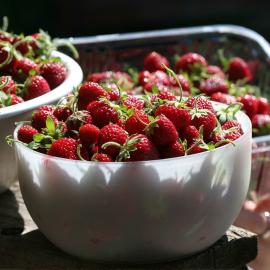
"Berry harvest insanity" by Lorika13 is licensed under CC BY-NC 2.0
Early Harvest and Cultivar Selection
- The crops most badly damaged by SWD are late-bearing raspberries, blackberries and strawberries.
- Plant cultivars that bear early in the season. SWD populations will be lower when crops ripen.
- Begin harvesting fruit as early as you can. Continue to remove fruit as soon as they ripen
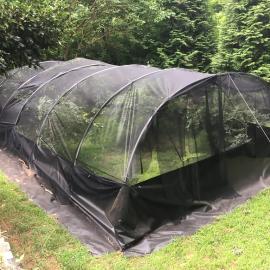
"Blueberry plants netting" by nate steiner is marked with CC0 1.0
Exclusion
- Cover plants with very fine netting or row cover (openings less than 1 mm) to keep SWD out.
- Netting must be in place before the first flies arrive.
- Netting must be completely sealed to keep SWD out. It should not touch fruit to prevent egg-laying through the mesh.
- Insects may enter when the mesh is lifted for harvesting.
- The netting will also exclude pollinators.
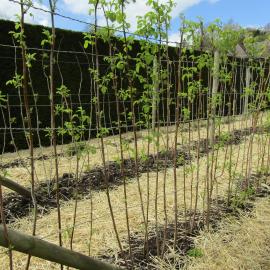
"How to train Raspberry canes" by wallygrom is licensed under CC BY-SA 2.0
Habitat management
- SWD prefer shady and humid habitats. Maintain an open and airy plant canopy. This is less attractive to SWD adults.
- Use drip irrigation to minimize humidity that attracts SWD. Fix leaky irrigation lines.
- Prevent SWD larvae and pupae development under the soil. Lay weed fabric on the rows remove fallen infested fruits.
Solutions for Spotted Wing Drosophila
Monitoring & Timing
- Monitor your garden for SWD flies from when fruit color first shows until the end of harvest.
- SWD can survive on nearby non-crop host plants. This makes control more difficult.
Non-chemical Methods
- Good sanitation can prevent the spread of SWD. Remove and destroy any fallen, damaged, and overripe fruit.
- Refrigerate fruit as soon after harvest as possible to slow larvae development.
- Trapping is not effective.
Insecticides (Insect Killers)
- Once fruit is infested, chemical control is very difficult.
NEED HELP?
Consider a licensed pest control company. Learn How to Hire a Pest Control Company.
Your local Extension Specialist in Oregon and other states can suggest other methods.
Jump to
| Method | Does it work? | Is it safe? | Recommendation |
|---|---|---|---|
A Sanitation |
Effective |
Low risk |
Recommended |
B Refrigeration |
Somewhat effective |
Low risk |
Recommended |
C Trapping |
Does not work |
Low risk |
Not Recommended |
D Control with Insecticides |
Somewhat effective |
Moderate risk |
Use if Necessary |
|
E If Using Insecticides, Protect Yourself & Minimize Risks
|
A
Sanitation
Non-Chemical Method
© 2016 Oregon State University
Sanitation
Recommended
Sanitation is important to reduce the spread and local increase of SWD populations.
- Pick all fruit as soon as they are nearly ripe.
- Remove and destroy any fallen, damaged, and overripe fruit.
- Protect fruit from rain and sun to reduce fruit split. SWD can be attracted to damaged fruit.
- Clean up infested fruit. Seal it in a plastic bag. Leave it in the sun to heat up and kill SWD, or put it in the trash.
- Don't compost or bury infested fruits.
| Does it work? | Effective |
| How much effort? | Moderate effort |
| What's the risk? | Low risk |
| Possible risk of exposure or harm from chemicals | NONE |
B
Refrigeration
Non-Chemical Method
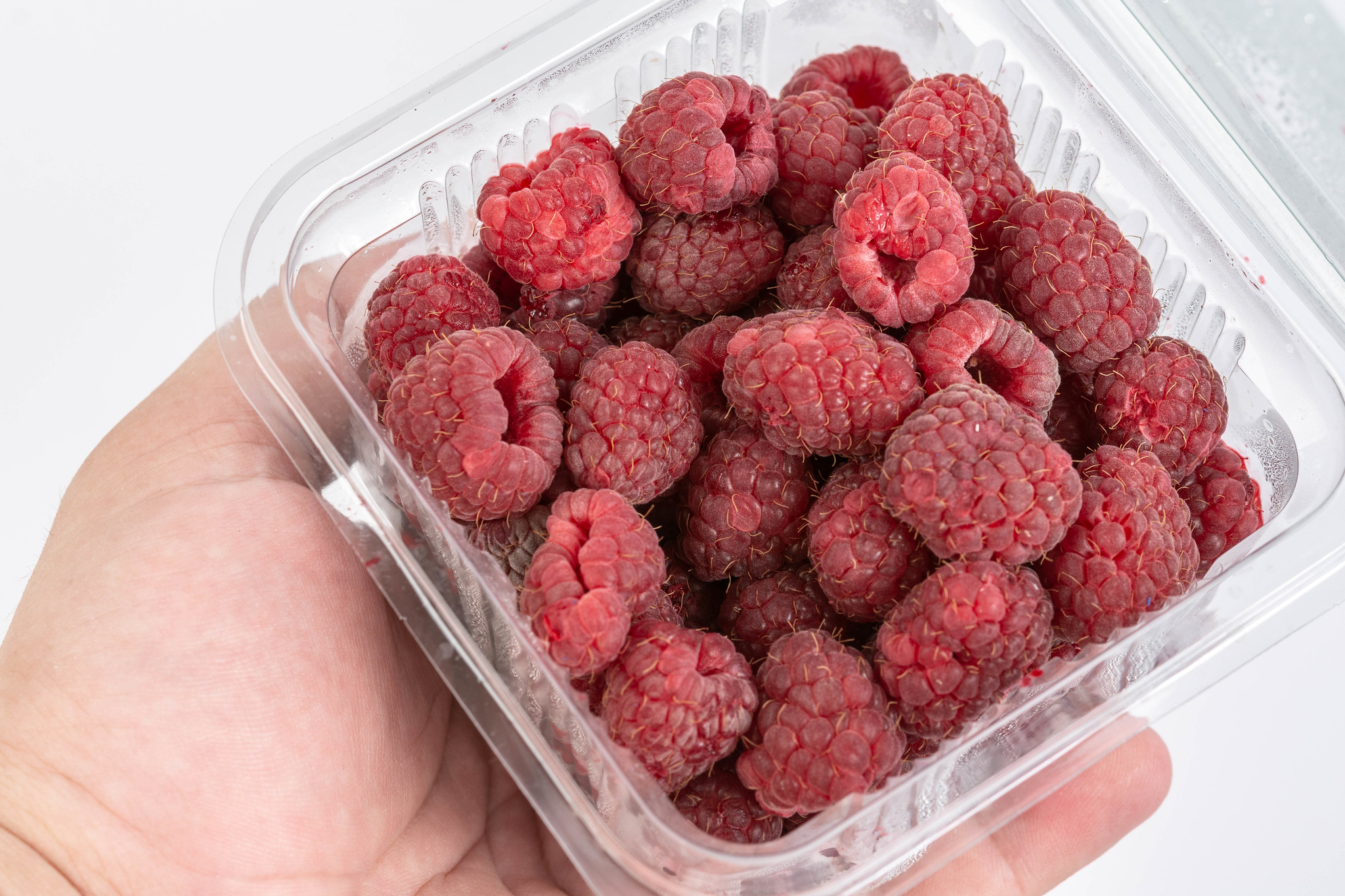
"Fresh Raw Raspberry in the market box" by wuestenigel is licensed under CC BY 2.0
Refrigeration
Recommended
- Pick all fruits as soon as they are nearly ripe.
- Refrigerate fruit to 34-35°F (2°C) as soon after harvest as possible. This will kill eggs and young larvae.
- These fruit are safe to eat. There is no known risk to human health from eating SWD.
| Does it work? | Somewhat effective |
| How much effort? | Low effort |
| What's the risk? | Low risk |
| Possible risk of exposure or harm from chemicals | NONE |
C
Trapping
Non-Chemical Method
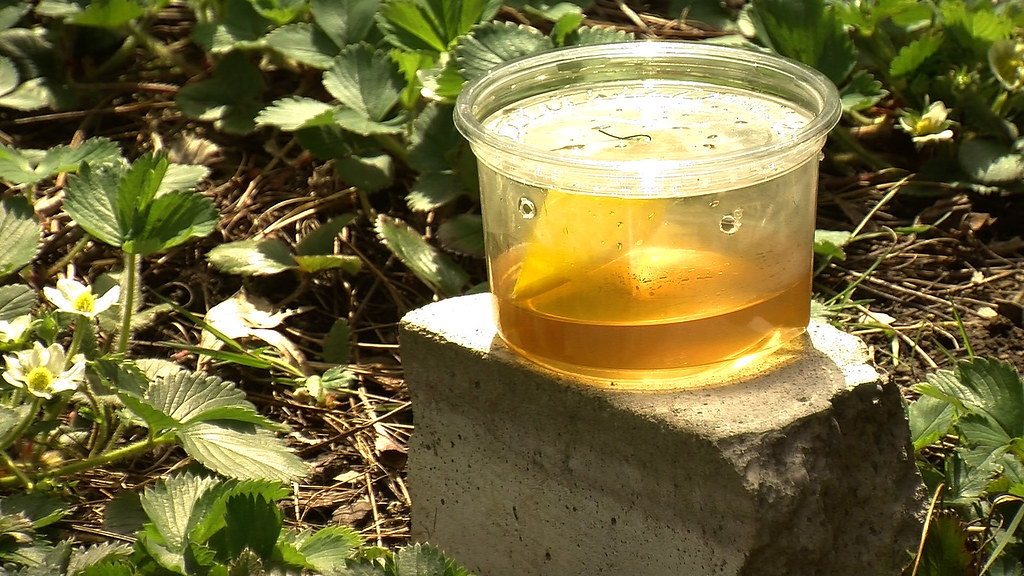
"placetrap001TW" by Tiffany Woods, Oregon State University is licensed under CC BY-SA 2.0
Trapping
Not Recommended
- Trapping has not been shown to reduce populations of SWD.
- It is useful for monitoring SWD presence.
- See "Prevent Spotted Wing Drosophila" for details.
| Does it work? | Does not work |
| How much effort? | Moderate effort |
| What's the risk? | Low risk |
| Possible risk of exposure or harm from chemicals | NONE |
D
Control with Insecticides
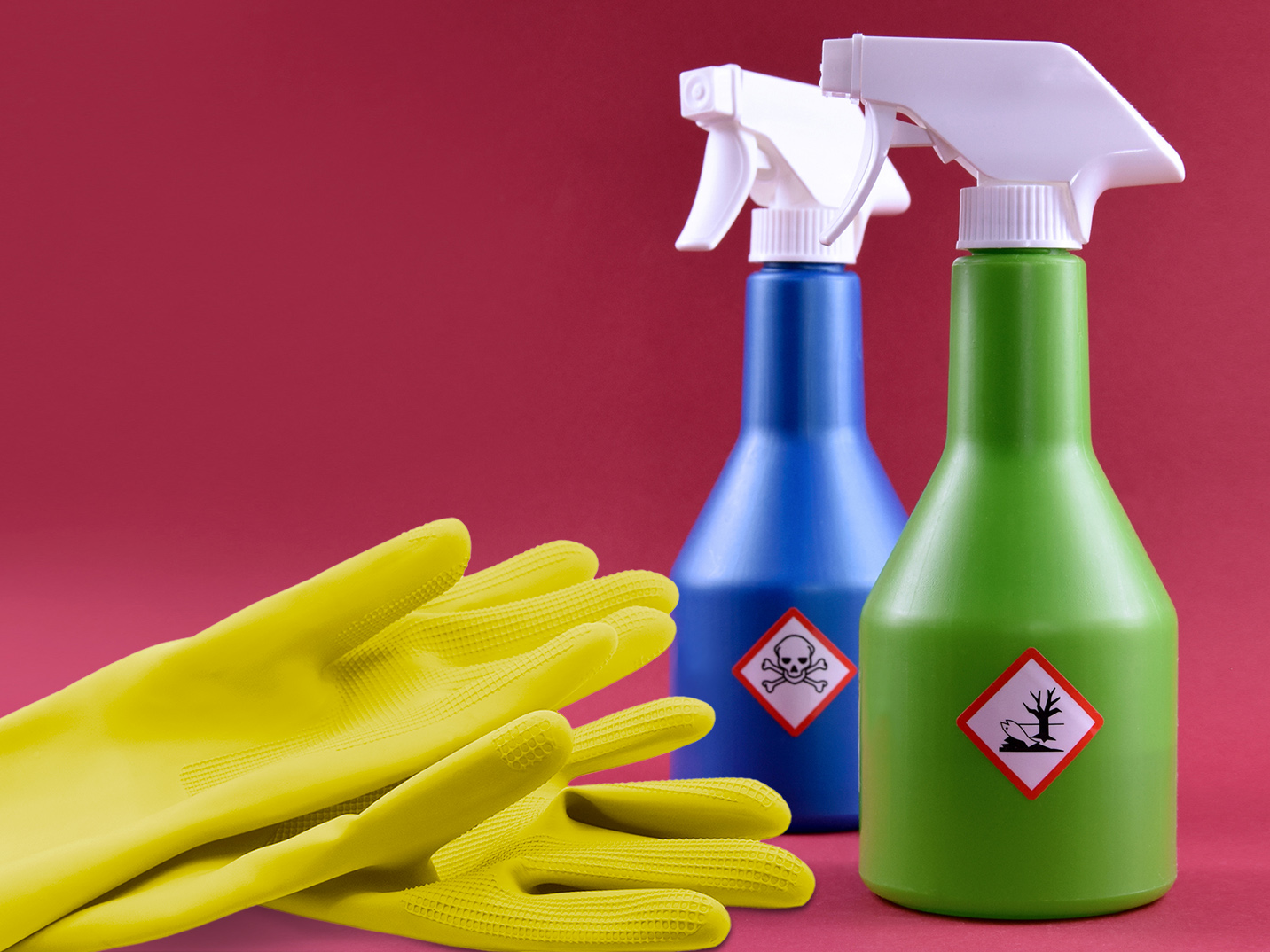
Chemical Method: Use with caution
iStock
Control with Insecticides
Use if Necessary
- Monitoring and prevention are the most effective ways to deter SWD.
- If you choose to use insecticides, also use monitoring and prevention.
- Some insecticides kill SWD adults. Once fruit is infested, few insecticides affect larvae in the fruit.
| Does it work? | Somewhat effective
|
| How much effort? | Moderate effort |
| What's the risk? | Moderate risk Using insecticides comes with real risks. ALWAYS read the entire label front to back. Review instructions even for brands you know. |
| Possible risk of exposure or harm from chemicals | Using insecticides includes some amount of risk. The lowest risk comes with using alternative methods.
You may be exposed to an insecticide if you:
Follow label directions to reduce risk. |
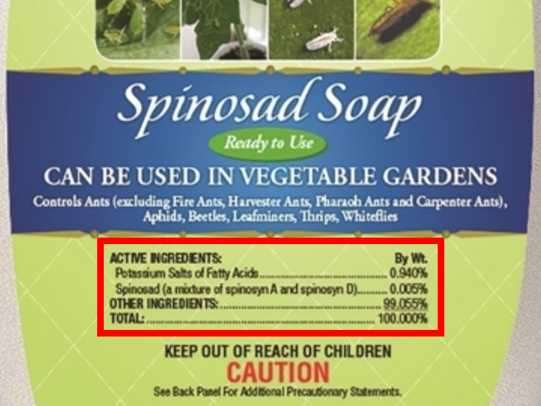
Some insecticides are available for home use. A few are listed below. These active ingredients are suggested chemical treatments to control spotted wing drosophila. Look for these chemical names in the “Active Ingredients” section of product labels.
- Citric acid
- Potassium laurate + Spinosad (a biological product made from a naturally occurring bacterium)
- Pyrethrin with sulfur
- Bifenthrin
Suggested active ingredients are from the Pesticide Information Center Online (PICOL) Database. They are permitted for HOME use in Oregon. Read the label for application directions and effectiveness information.
ONLY professional pesticide applicators can use Restricted-Use Pesticides (RUP) that may be more effective. If you need further support, contact a licensed pesticide applicator.
Insecticide Application Tips
- Proper timing of insecticide sprays is critical for them to work against SWD. Read the label carefully for application and frequency details.
- Once the larvae is in the fruit, it is protected from most insecticides.
- Thoroughly cover leaves and stems with spray. Insecticides must contact the flies to be effective.
- Researchers recommend alternating products (by active ingredient). Don't use one type of insecticide repeatedly. Local populations of SWD may develop resistance.
- Some insecticides are highly toxic to bees. Do not spray onto blooming crops. Do not allow drift onto blooming crops or weeds when bees are active.
If Using Insecticides, Protect Yourself & Minimize Risks
Chemical Method: Use with Caution
Weston Miller, Oregon State University
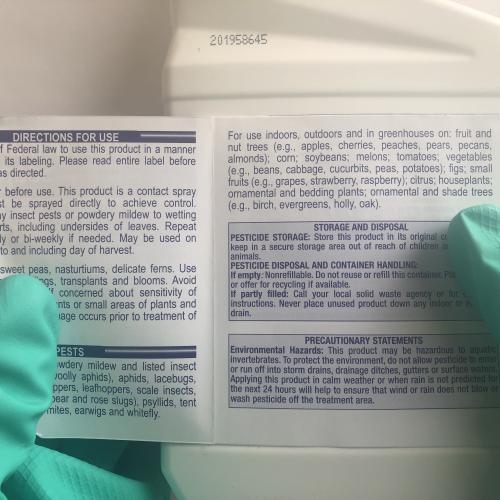
Why Is It Important to Read Insecticide Product Labels?
- They have detailed information on how to use the product correctly and legally.
- They contain information on potential hazards of the product.
- They provide instructions you should follow for poisonings and spills.
- Following label instructions helps you to minimize the risks and maximize the benefits.
Key Insecticide Safety Tips
- Read the entire label front to back.
- Follow the instructions.
- Review the instructions even for brands you know.
- Only apply the product where the label says it can be applied.
- Keep all insecticides in their original container.
The Label is the Law
ALWAYS read the label before using insecticide products. The label is a legal document that provides information on how to safely use the insecticide. It includes required personal protective gear and application methods. This helps avoid harm to human health and the environment. Using an insecticide in ways not listed on the label is illegal. It can result in legal enforcement actions.
READ THE LABEL & Follow Instructions
It has instructions to protect you and the environment.
- Labels are different for every product and they often change over time.
- Use a magnifying glass for small print.
- Pay attention to CAUTION, WARNING, and DANGER statements.
- Pay attention to the PRECAUTIONARY STATEMENTS.
- The law states you must read and follow insecticide instructions.
Protect Yourself
Eye, skin, & lung irritants
- Wear the right protective gear. This often includes, but is not limited to: a long-sleeved shirt, pants, socks, closed shoes, safety glasses, and chemical-resistant gloves.
- Avoid contact with eyes, skin, or clothing.
- Wash hands after mixing or applying, and before eating or smoking.
- Never spray directly overhead. Pay attention to wind conditions.
Protect Children & Pets
Keep out of the reach of children.
- Keep children and pets away from the application area (read label for how long).
- Remove toys and pet dishes from the area before applying insecticides. Wait until spray has dried or dust has settled.
Protect Pollinators
Many insecticides are extremely toxic to bees.
- Honey bees and other pollinators are harmed by most insecticides.
- Don’t spray on bees or other flying insects.
- Don’t allow spray to contact blooming plants.
Avoid Wet Weather & Keep Insecticides Out of Waterways
Some insecticides are toxic to fish and aquatic invertebrates.
- Don’t spray insecticides in water.
- Insecticides sprayed on plants can wash off with rain and enter waterways.
Storage & Disposal
- Store out of the reach of children and pets.
- Store in a cool and dry place.
- Never pour down any drain.
- If you mix too much, apply it according to the label rather than storing it.
- Don’t put pesticide containers in the trash unless instructed by the label.
- Take unused insecticides to a hazardous waste facility.
Call 1-800-CLEANUP (1-800-253-2687) to find out where to dispose of pesticides.
For the Portland metro region in Oregon, contact Metro’s Recycling Information. Call 503-234-3000, email or visit Metro’s website
More about:
About Using Pesticides on School Grounds in Oregon
If using pesticides on school grounds, there are special rules in Oregon. See School Integrated Pest Management (Oregon Department of Agriculture).
NEED HELP?
The National Pesticide Information Center (NPIC) can answer questions about pest control chemicals.
1-800-858-7378 or npic@ace.orst.edu
Consider using a licensed pest or weed control company. Learn How to Hire a Pest Control Company.
Your local Extension Specialist in Oregon and other states can suggest other methods.
Content provided by writers Signe Danler and Jeremiah Mann, and by editor Weston Miller. Pesticide safety information edited by Kaci Buhl.
Peer review facilitated by OSU Department of Horticulture.




SPOTTED WING DROSOPHILA REFERENCES
Spotted-wing Drosophila: An Emerging Berry and Stone Fruit Pest
PNW Insect Management Handbook
Recognize Fruit Damage from Spotted Wing Drosophila
Oregon State University Extension
Spotted Wing Drosophila: A Quick, 7-Step Guide to Detecting SWD Larvae in Fruit
Oregon State University Extension
Spotted Wing Drosophila
Washington State University Tree Fruit
Spotted Wing Drosophila
University of California IPM
Spotted wing drosophila
University of Minnesota Extension
Spotted-wing Drosophila: Management in Home Plantings
Colorado State University Extension